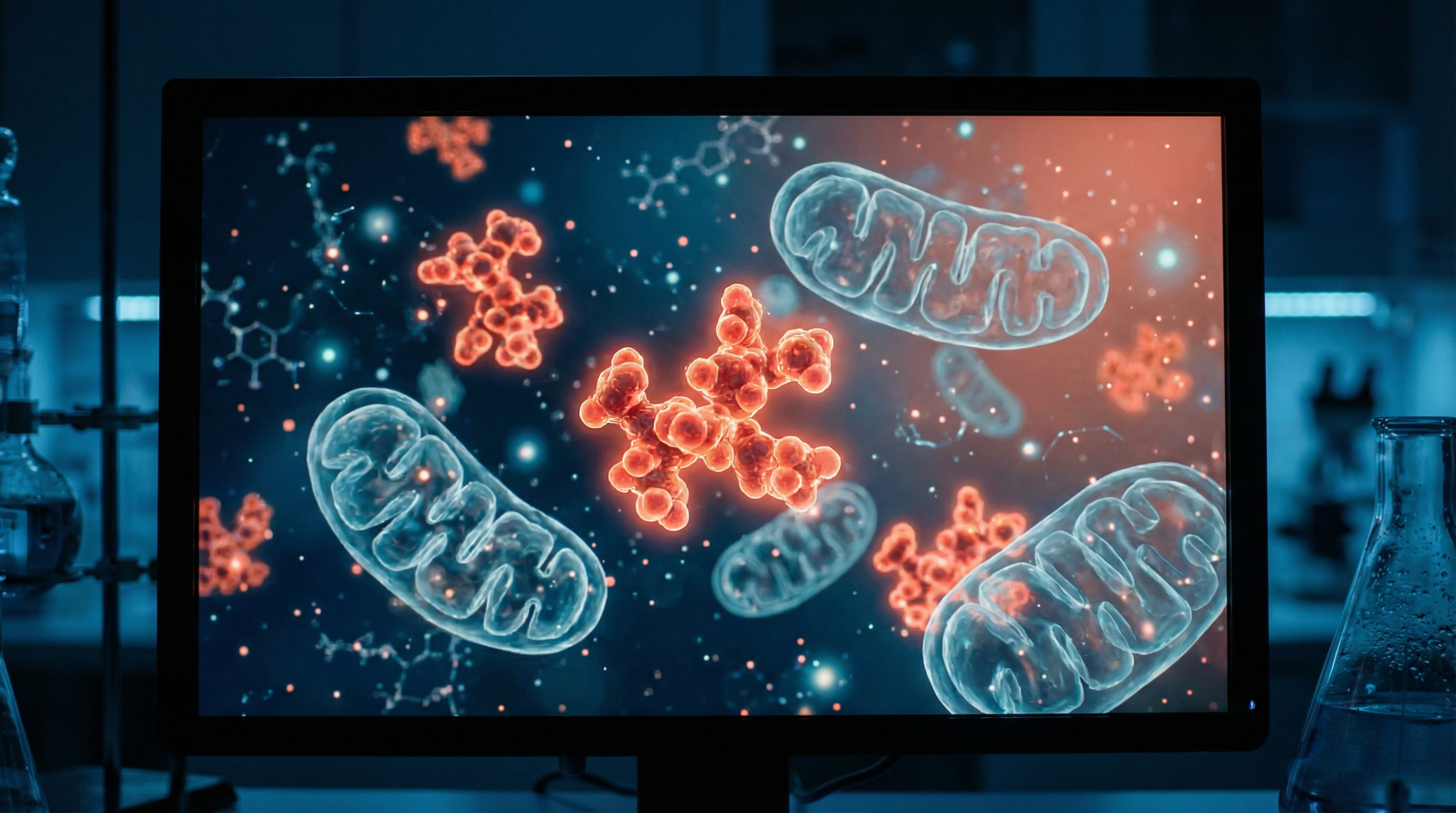
If you follow longevity science, you’ve heard about the importance of controlling oxidative stress — the relentless damage that reactive oxygen species (ROS) inflict on your cells and DNA as you age. Most antioxidants tackle this problem from the outside. Astaxanthin is different. It embeds directly into cell membranes and mitochondrial membranes, neutralizing free radicals right where they’re produced.
This red-orange carotenoid pigment, found naturally in microalgae and the marine life that feeds on it, has been called the world’s most powerful natural antioxidant — and the research increasingly backs that claim. In head-to-head comparisons, astaxanthin’s singlet oxygen quenching capacity is roughly 6,000 times stronger than vitamin C, 800 times stronger than CoQ10, and 550 times stronger than vitamin E.
For anyone building a mitochondrial supplement stack, astaxanthin deserves serious consideration.
What Is Astaxanthin?
Astaxanthin is a keto-carotenoid — a fat-soluble pigment belonging to the xanthophyll family. It is produced primarily by the freshwater microalga Haematococcus pluvialis, which synthesizes massive amounts of astaxanthin as a survival mechanism when exposed to environmental stress such as UV light, nutrient deprivation, or high salinity.
This pigment is what gives salmon, shrimp, lobster, and flamingos their characteristic pink-red color. Wild sockeye salmon accumulate 26–38 mg of astaxanthin per kilogram of flesh through their diet of astaxanthin-rich krill and algae.
Unlike beta-carotene and most other carotenoids, astaxanthin has a unique molecular structure that allows it to span the entire lipid bilayer of cell membranes. This positioning lets it scavenge free radicals on both the inner and outer surfaces of the membrane simultaneously — a capability no other common antioxidant shares.
How Astaxanthin Protects Mitochondria
Mitochondria are ground zero for oxidative stress. The electron transport chain that generates ATP inevitably leaks electrons, which combine with oxygen to form superoxide radicals. Over time, this ROS production damages mitochondrial DNA, membrane lipids, and respiratory chain proteins — a vicious cycle that drives mitochondrial dysfunction and cellular aging.
Astaxanthin interrupts this cycle at multiple levels:
Direct ROS Scavenging in the Membrane
Because astaxanthin integrates into mitochondrial membranes, it neutralizes superoxide and hydroxyl radicals at their point of origin. A 2018 study in Biochimica et Biophysica Acta demonstrated that astaxanthin reduced mitochondrial ROS production by 40–50% in human endothelial cells exposed to oxidative stress, without impairing normal electron transport chain function.
Preserving Membrane Integrity
Lipid peroxidation — the chain reaction that damages cell membrane fats — is a major driver of mitochondrial decline. Astaxanthin’s trans-membrane positioning makes it exceptionally effective at halting lipid peroxidation cascades before they spread. Research shows it inhibits lipid peroxidation at rates 100 times greater than alpha-tocopherol (vitamin E).
Upregulating Endogenous Antioxidant Defenses
Astaxanthin doesn’t just fight free radicals directly — it also activates the Nrf2 signaling pathway, a master regulator of the body’s own antioxidant genes. This leads to increased production of glutathione, superoxide dismutase (SOD), and catalase. By boosting these endogenous defenses, astaxanthin provides long-lasting protection that outlives the molecule itself.
Supporting Mitochondrial Biogenesis
Emerging research suggests astaxanthin may promote the creation of new, healthy mitochondria by activating AMPK and PGC-1α — the same pathways triggered by exercise and cold exposure. A 2021 animal study found that astaxanthin supplementation increased mitochondrial number in skeletal muscle by 25% over eight weeks.
Cardiovascular Benefits
Heart muscle cells are among the most mitochondria-dense cells in the body, making them particularly vulnerable to oxidative damage. Astaxanthin offers several cardiovascular benefits:
- LDL oxidation protection: Oxidized LDL cholesterol is far more atherogenic than native LDL. A randomized controlled trial found that 12 mg/day of astaxanthin reduced LDL oxidation by 35% over 12 weeks.
- Blood pressure support: A meta-analysis of clinical trials found modest but consistent reductions in systolic blood pressure (3–5 mmHg) with astaxanthin supplementation.
- Improved blood lipids: Multiple studies report increased HDL cholesterol and reduced triglycerides at doses of 6–12 mg/day.
- Reduced arterial stiffness: Astaxanthin appears to improve endothelial function and reduce inflammatory markers like C-reactive protein (CRP) and interleukin-6.
Brain Health and Cognitive Protection
The brain consumes roughly 20% of the body’s oxygen despite representing only 2% of body weight. This metabolic intensity generates enormous oxidative stress, making the brain especially vulnerable to mitochondrial decline.
Astaxanthin crosses the blood-brain barrier — a critical advantage over many antioxidants that cannot reach brain tissue. Once there, it provides neuroprotection through several mechanisms:
- Reduced neuroinflammation: Astaxanthin suppresses NF-κB activation and reduces pro-inflammatory cytokines in brain tissue.
- Improved cognitive performance: A 2023 randomized trial in healthy older adults found that 12 mg/day of astaxanthin for 12 weeks improved composite memory scores and psychomotor speed compared to placebo.
- Protection against neurodegeneration: Preclinical studies show astaxanthin reduces amyloid-beta accumulation and tau phosphorylation — two hallmarks of Alzheimer’s disease.
- Enhanced cerebral blood flow: Astaxanthin improves nitric oxide bioavailability, supporting blood flow to the brain.
Skin Aging and UV Protection
Astaxanthin provides internal photoprotection that complements topical sunscreen. Clinical trials have demonstrated:
- Reduced UV-induced skin damage (erythema) after 4–8 weeks of supplementation
- Improved skin elasticity, moisture, and wrinkle depth
- Reduced age spot size and melanin index
- Lower markers of skin collagen degradation
A 2018 double-blind trial found that 4 mg/day of astaxanthin for 16 weeks significantly improved crow’s feet wrinkle depth, skin elasticity, and transepidermal water loss compared to placebo. These effects result from both antioxidant protection and direct inhibition of matrix metalloproteinases (MMPs) — the enzymes that break down collagen.
Exercise Performance and Recovery
Astaxanthin’s mitochondrial benefits translate directly to physical performance:
- Improved fat oxidation: A study in competitive cyclists found that 4 mg/day of astaxanthin for 28 days increased fat oxidation during endurance exercise by 20%, sparing glycogen and extending time to exhaustion.
- Reduced exercise-induced muscle damage: Athletes taking astaxanthin showed lower creatine kinase levels (a marker of muscle damage) after intense training.
- Faster recovery: Reduced inflammatory markers and oxidative stress biomarkers after exercise in supplemented groups.
These benefits make astaxanthin a natural complement to other exercise-recovery compounds like CoQ10 and creatine.
Dosage and Best Forms
Recommended Dosage
Clinical trials have used a range of doses, but the most consistent benefits appear at:
- General antioxidant support: 4–8 mg/day
- Cardiovascular and cognitive benefits: 8–12 mg/day
- Athletic performance: 4–12 mg/day
- Skin health: 4–6 mg/day
Most experts recommend starting at 4 mg/day and increasing to 8–12 mg/day based on individual goals and response.
Source Matters
Not all astaxanthin is equal:
- Natural astaxanthin (from Haematococcus pluvialis) is the preferred form. It contains a mixture of esterified and free astaxanthin, with superior bioavailability and antioxidant capacity compared to synthetic versions.
- Synthetic astaxanthin (from petrochemicals) has a different stereoisomer profile and has shown lower biological activity in comparative studies. It is primarily used in aquaculture feed, not human supplements.
Always choose supplements specifying “natural astaxanthin from Haematococcus pluvialis” on the label.
Absorption Tips
Astaxanthin is fat-soluble, so absorption increases dramatically when taken with dietary fat. Taking it with a meal containing healthy fats (olive oil, avocado, nuts, or fatty fish) can improve bioavailability by 2–3 times compared to taking it on an empty stomach.
Safety and Side Effects
Astaxanthin has an excellent safety profile. It has received Generally Recognized as Safe (GRAS) status from the FDA at doses up to 24 mg/day. Clinical trials lasting up to 12 months at doses of 4–20 mg have reported no significant adverse effects.
Minor side effects that occasionally occur include:
- Slight reddish-orange discoloration of stool (harmless, due to the pigment)
- Mild gastrointestinal discomfort at higher doses
- Potential interactions with blood pressure medications (due to its mild hypotensive effect)
Astaxanthin does not convert to vitamin A in the body, so there is no risk of vitamin A toxicity — a concern with some other carotenoids like beta-carotene.
Pregnant or breastfeeding women should consult a healthcare provider before supplementing, as human safety data in these populations is limited.
How Astaxanthin Fits Into a Longevity Stack
Astaxanthin pairs exceptionally well with other mitochondrial and longevity supplements:
- With CoQ10/ubiquinol: CoQ10 supports electron transport chain function while astaxanthin protects the mitochondrial membrane from oxidative damage — complementary mechanisms.
- With NMN or NR: NAD+ boosters fuel cellular repair enzymes (sirtuins, PARPs) while astaxanthin reduces the oxidative damage those enzymes need to fix. This combination addresses both energy production and damage prevention.
- With omega-3 fatty acids: Omega-3s and astaxanthin are both fat-soluble and share anti-inflammatory pathways. Taking them together improves absorption of both.
- With vitamin D: Both compounds support immune function and reduce chronic inflammation through different mechanisms.
For a comprehensive approach to mitochondrial health, consider adding astaxanthin to a foundational longevity stack alongside NAD+ precursors, CoQ10, and essential micronutrients.
Frequently Asked Questions
Is astaxanthin better than CoQ10 for mitochondrial health?
They work through different mechanisms and are best used together. CoQ10 serves as an essential electron carrier in the mitochondrial respiratory chain and directly participates in ATP production. Astaxanthin primarily protects mitochondrial membranes from oxidative damage. CoQ10 fuels the engine; astaxanthin protects it from wear. Both decline with age, and both have strong evidence for supplementation benefits.
Can I get enough astaxanthin from food alone?
It’s difficult. Wild sockeye salmon — the richest dietary source — contains roughly 3–4 mg per 6-ounce serving. You would need to eat wild salmon daily to approach the 8–12 mg doses used in clinical trials. Shrimp and crab contain much less (0.5–1 mg per serving). Supplementation is the most practical way to reach therapeutic doses.
How long does it take for astaxanthin to work?
Astaxanthin accumulates in cell membranes over time. Most clinical trials show measurable benefits beginning at 4–8 weeks, with continued improvement through 12–16 weeks. Skin and cardiovascular biomarkers typically take the longest to respond. For exercise performance, some studies show effects within 2–4 weeks.
Does astaxanthin interact with any medications?
Astaxanthin may enhance the effects of blood pressure–lowering medications due to its mild hypotensive properties. It also has mild anticoagulant effects and should be used cautiously alongside blood-thinning medications like warfarin. There are no known interactions with NAD+ boosters, CoQ10, or most other longevity supplements. As always, consult your physician if you take prescription medications.
Is synthetic astaxanthin safe for human use?
While synthetic astaxanthin is approved for use in aquaculture and animal feed, most human clinical research has used natural astaxanthin from Haematococcus pluvialis. The two forms have different stereoisomer ratios, and natural astaxanthin has demonstrated superior antioxidant activity in comparative studies. For human supplementation, natural astaxanthin is strongly recommended.