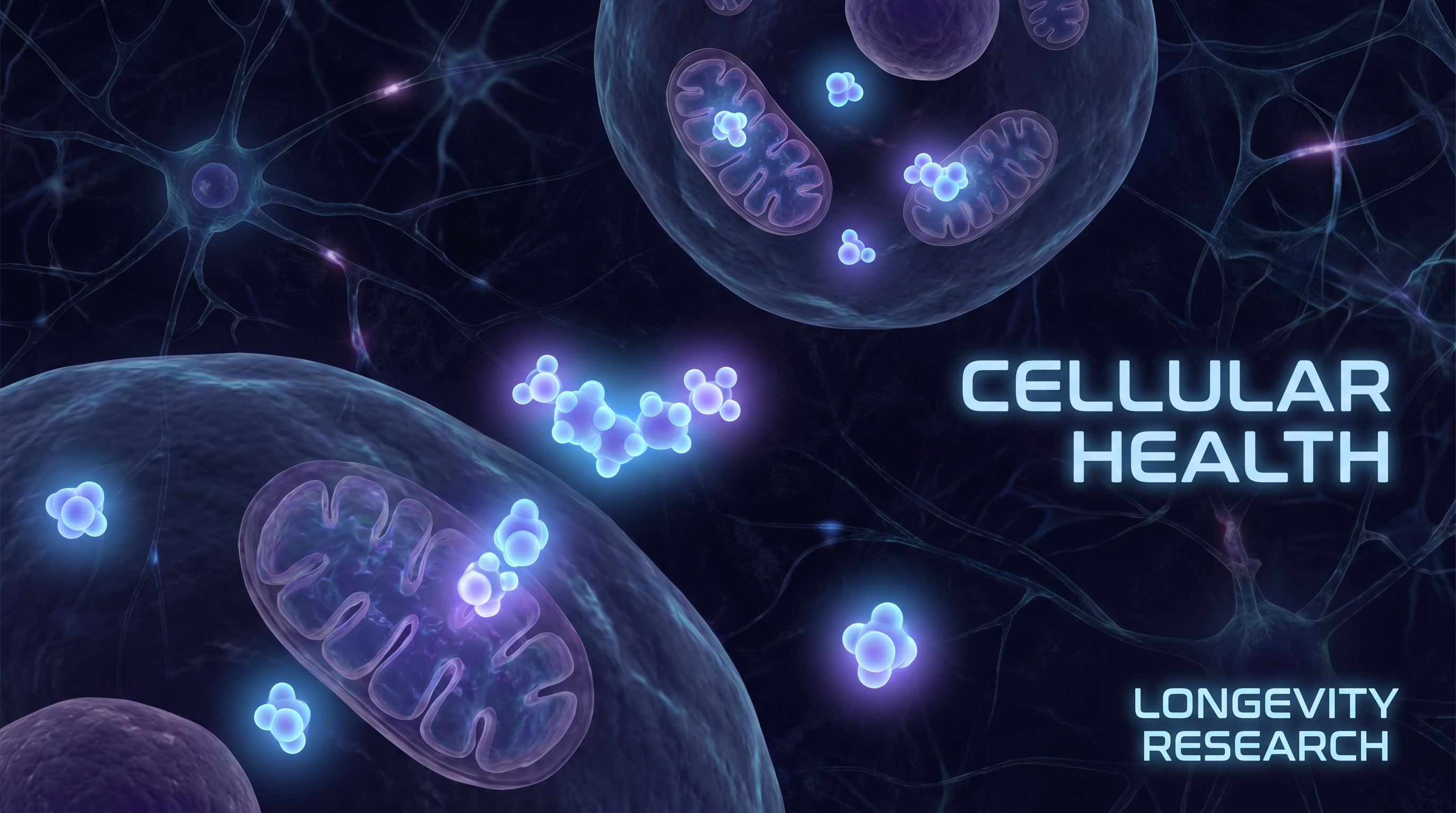
Most people reach for melatonin when they can’t sleep. But calling melatonin a “sleep hormone” is like calling NAD+ a “coenzyme” — technically accurate yet wildly underselling the whole story. Over the past two decades, researchers have discovered that melatonin is one of the most potent mitochondrial antioxidants ever identified, a regulator of the very cellular machinery that determines how fast you age.
If you’re serious about longevity, melatonin deserves a second look — not just at bedtime, but as a foundational anti-aging molecule.
What Is Melatonin, Really?
Melatonin (N-acetyl-5-methoxytryptamine) is synthesized primarily in the pineal gland from tryptophan via serotonin. It follows a strict circadian rhythm: levels begin rising around 9 PM, peak between 2–4 AM, and fall sharply by morning.
But melatonin is also produced locally inside cells — particularly inside mitochondria. The mitochondrial melatonin system operates independently of the pineal gland and functions specifically as an on-site antioxidant defense, neutralizing free radicals generated during ATP production before they can damage the mitochondrial membrane, mtDNA, or the electron transport chain itself.
This dual role — circadian regulator and intracellular antioxidant — is what makes melatonin so relevant to the biology of aging.
How Melatonin Slows Aging: The Mechanisms
1. Mitochondrial Antioxidant Defense
Mitochondria generate approximately 90% of the body’s ATP, but this comes at a cost: reactive oxygen species (ROS) leak out of the electron transport chain constantly. Over decades, this oxidative damage accumulates, degrading mitochondrial function — a hallmark of aging in every long-lived species studied.
Melatonin acts at multiple points in this process:
- Direct scavenging: Melatonin neutralizes hydroxyl radicals, superoxide anions, and peroxynitrite with high efficiency. Crucially, unlike vitamin C or vitamin E, melatonin’s antioxidant metabolites (AFMK, AMK) continue scavenging ROS in a “free radical scavenging cascade” — one melatonin molecule can neutralize up to 10 free radicals.
- Upregulating endogenous antioxidant enzymes: Melatonin increases the expression of superoxide dismutase (SOD), catalase, and glutathione peroxidase — your body’s own first-line antioxidant defenses.
- Protecting Complex I: The first complex of the electron transport chain is particularly vulnerable to oxidative damage. Melatonin stabilizes Complex I activity, preserving efficient electron flow and reducing ROS leak at the source.
A 2023 meta-analysis in Ageing Research Reviews confirmed that melatonin supplementation significantly reduces markers of oxidative stress (MDA, 8-OHdG) and increases antioxidant enzyme activity across human trials.
2. Sirtuin Activation and NAD+ Synergy
Sirtuins (SIRT1–SIRT7) are longevity-associated proteins that require NAD+ as a cofactor. They regulate everything from DNA repair to mitochondrial biogenesis to inflammatory signaling. As NAD+ levels decline with age, sirtuin activity drops — contributing to the hallmarks of aging.
Melatonin activates SIRT1 through multiple pathways:
- Melatonin receptor signaling (MT1/MT2) increases NAMPT, the rate-limiting enzyme in NAD+ biosynthesis
- Melatonin reduces PARP1 hyperactivation, conserving NAD+ for sirtuin use
- SIRT1 activation by melatonin then feeds back to support mitochondrial biogenesis via PGC-1α
This creates a synergistic loop: melatonin helps preserve the NAD+ pool that sirtuins depend on, and the resulting sirtuin activation improves the very mitochondrial health that melatonin protects. This is why many longevity researchers now combine melatonin with NMN or NR supplementation for additive mitochondrial benefits.
3. Mitophagy and Mitochondrial Quality Control
Damaged mitochondria must be cleared through a selective autophagy process called mitophagy — failure to do so leads to accumulation of dysfunctional mitochondria, increased ROS, and accelerated cellular senescence.
Melatonin has been shown to:
- Activate PINK1/Parkin signaling, the primary mitophagy pathway
- Promote mitochondrial fission (separating damaged segments for disposal)
- Upregulate LC3-II and Beclin-1, key autophagy regulators
In animal models of accelerated aging, melatonin treatment consistently restores mitophagy flux to levels seen in younger animals. Understanding how to activate mitophagy through multiple pathways — including melatonin — is one of the most effective anti-aging strategies available.
4. Inflammation and the NLRP3 Inflammasome
Chronic low-grade inflammation — “inflammaging” — drives virtually every age-related disease. The NLRP3 inflammasome is a key molecular switch that activates IL-1β and IL-18, pro-inflammatory cytokines that accelerate cellular senescence and tissue damage.
Melatonin is a potent NLRP3 inhibitor. Clinical studies in populations with high inflammatory load (obese patients, COVID-19 recovery, type 2 diabetes) have consistently shown melatonin reducing CRP, IL-6, and TNF-α levels. In the context of longevity, suppressing chronic inflammaging may be one of melatonin’s most clinically impactful mechanisms.
5. Telomere Protection
Telomeres — the protective caps on chromosomes — shorten with each cell division and under oxidative stress. Short telomeres are associated with biological aging, cancer risk, and all-cause mortality.
Melatonin reduces oxidative damage to telomeres and, in some studies, has been shown to increase telomerase activity — the enzyme that rebuilds telomere length. While human data is still emerging, animal and in vitro studies consistently show melatonin preserving telomere length under oxidative stress conditions.
Melatonin and the Aging Pineal Gland
Here’s a critical fact for longevity enthusiasts: melatonin production declines dramatically with age.
At peak production in early childhood, the pineal gland secretes 70–80 pg/mL of melatonin nightly. By age 60, this has dropped to less than 20 pg/mL — a reduction of 60–70%. By age 80, many individuals have almost undetectable nighttime melatonin peaks.
This age-related decline in melatonin has been proposed as both a marker and a cause of accelerated biological aging. The “melatonin hypothesis of aging” suggests that declining melatonin is not merely a consequence of aging but actively contributes to it by removing a key antioxidant and circadian regulator.
Pineal calcification — the accumulation of calcium deposits in the pineal gland — accelerates melatonin decline and is associated with worse cognitive aging outcomes. Limiting fluoride exposure and optimizing magnesium intake may help slow pineal calcification.
Key Health Benefits Summary
| Mechanism | Effect | Evidence Level |
|---|---|---|
| Mitochondrial ROS scavenging | Reduces oxidative damage | Strong (multiple RCTs) |
| SIRT1/NAD+ axis | Supports sirtuin longevity pathways | Moderate (animal + in vitro) |
| NLRP3 inhibition | Reduces chronic inflammation | Strong (clinical trials) |
| Mitophagy activation | Clears damaged mitochondria | Moderate (animal models) |
| Telomere protection | Preserves chromosomal integrity | Emerging (in vitro) |
| Sleep architecture | Restores deep sleep, growth hormone | Strong (multiple RCTs) |
| Circadian rhythm | Improves metabolic health | Strong (epidemiological) |
Dosage Guide
Melatonin dosing is nuanced. Most commercial doses (5–10 mg) are far above physiological levels and can cause receptor desensitization or daytime grogginess.
| Goal | Dose | Timing |
|---|---|---|
| Sleep optimization | 0.5–1 mg | 30–60 min before bed |
| Circadian reset (jet lag) | 0.5–3 mg | At destination bedtime |
| Antioxidant / longevity | 1–5 mg | Before bed |
| Higher-dose research protocols | 10–20 mg | Under medical supervision |
| Mitochondrial support (older adults) | 3–5 mg | Before bed |
Start low: 0.5–1 mg is often sufficient for sleep and produces fewer side effects than higher doses. Physiological nighttime peaks are in the range of 100–200 pg/mL — even 0.3 mg orally produces supraphysiological blood levels.
For longevity purposes, doses of 3–5 mg are most commonly used in research, with some anti-aging physicians recommending higher doses (10–20 mg) for their antioxidant effects specifically. This range should be discussed with a physician, particularly if you have autoimmune conditions or take blood thinners.
Stacking Melatonin with Other Longevity Supplements
Melatonin works exceptionally well in synergistic stacks:
Melatonin + NMN/NR: Melatonin conserves NAD+ (by reducing PARP1 activity) while NMN/NR replenishes it. Together they support sirtuin activation and mitochondrial biogenesis more effectively than either alone. See our guide to the best mitochondrial supplement stack for full stack recommendations.
Melatonin + Magnesium Glycinate: Magnesium is a cofactor for melatonin synthesis and enhances sleep depth and GABA signaling. This combination is highly effective for sleep quality and stress recovery.
Melatonin + Resveratrol: Both activate SIRT1. Resveratrol directly activates SIRT1; melatonin increases NAD+ availability. Taken together at night, this combination provides complementary sirtuin support.
Melatonin + Glycine: Glycine lowers core body temperature and improves sleep architecture; melatonin initiates sleep onset. Together they produce deeper, more restorative sleep — a critical but underappreciated longevity lever.
For a comprehensive overview of how these pieces fit together, see our longevity supplement stack for beginners.
Safety Profile and Precautions
Melatonin has an excellent safety record across decades of use:
- Short-term: Well-tolerated at doses up to 10 mg in most adults
- Long-term: Studies up to 2 years show no significant adverse effects at physiological doses
- Drug interactions: Warfarin (may increase bleeding risk), immunosuppressants (may enhance immune effects), sedatives (additive CNS depression)
- Autoimmune conditions: Melatonin has immunomodulatory effects; use caution in autoimmune diseases
- Pregnancy/breastfeeding: Insufficient data — avoid unless medically indicated
- Children: Only use under medical supervision; melatonin affects pubertal development
Avoid: Very high doses chronically without medical supervision. Some individuals report vivid dreams, headaches, or daytime sedation — reduce dose if this occurs.
Melatonin is available OTC in the US but is prescription-only in many European countries and Australia, reflecting stricter regulatory views on its hormonal nature.
Frequently Asked Questions
Q: Does melatonin lose effectiveness over time? Tolerance to melatonin’s sleep-initiating effects is not commonly observed at low doses (0.5–3 mg). However, using high doses nightly may downregulate melatonin receptors over time. Cycling (e.g., 5 nights on, 2 nights off) is a reasonable approach for long-term use.
Q: Is it true melatonin is an antioxidant stronger than vitamin E? In laboratory studies of lipid peroxidation, melatonin has shown antioxidant activity exceeding vitamin E in some contexts. Its unique advantage is amphiphilicity — it crosses both lipid (cell membrane) and aqueous (cytoplasm) compartments — and its cascade scavenging where metabolites continue neutralizing free radicals.
Q: Can melatonin replace good sleep hygiene? No. Melatonin works best as a complement to proper sleep hygiene: consistent sleep/wake times, dark sleeping environment, avoiding blue light after sunset, and cool room temperature. It is a tool, not a substitute for the conditions that produce quality sleep.
Q: Does melatonin affect testosterone or other hormones? At physiological doses, melatonin has minimal effects on sex hormones in adults. Some studies suggest it may modestly reduce LH in women with PCOS. High-dose, long-term use in men has not shown consistent testosterone suppression in clinical literature, but data is limited.
Q: When should I take melatonin for longevity benefits rather than sleep? For its antioxidant and anti-aging effects, melatonin should still be taken at night to align with the body’s natural rhythm. Taking it during the day disrupts circadian signaling and may be counterproductive. Dose at the same time each night, 30–60 minutes before intended sleep.
The Bottom Line
Melatonin is one of the most underutilized tools in the longevity toolkit. Its role extends far beyond sleep: it acts as a mitochondrial antioxidant, preserves NAD+ for sirtuin function, activates mitophagy, suppresses inflammaging, and may protect telomeres. And with pineal production declining 60–70% by age 60, supplementation addresses a genuine age-related deficit.
For most adults over 40 pursuing a longevity-oriented supplement regimen, a modest nightly dose of 1–5 mg melatonin — taken alongside complementary compounds like NMN, magnesium glycinate, and resveratrol — represents one of the most evidence-backed and cost-effective interventions available.
Sleep is when your body repairs itself. Melatonin is the molecule that makes that repair possible.