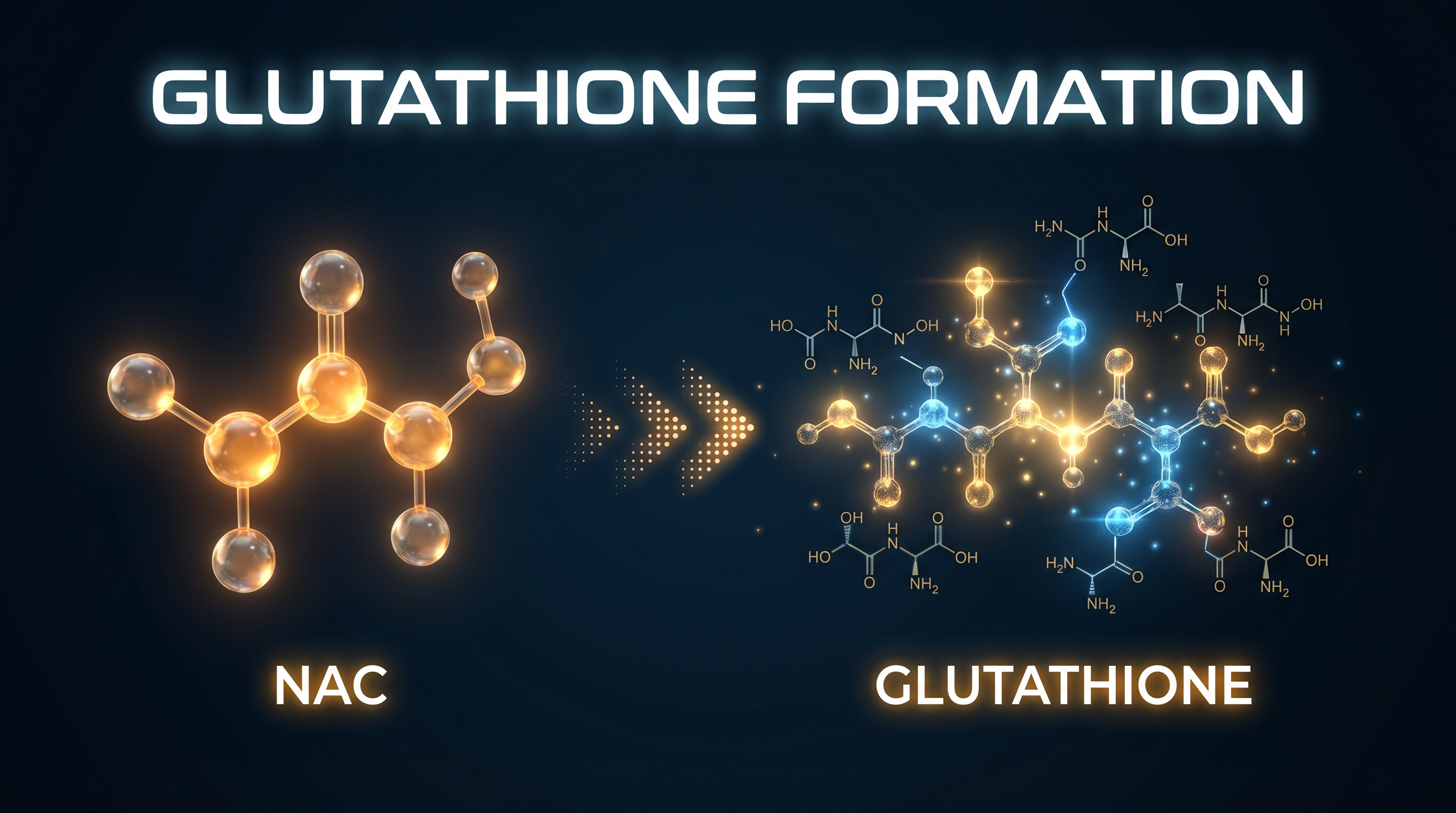
Your body’s most powerful internal antioxidant — glutathione — declines steadily after age 40. By the time you reach 60, intracellular glutathione levels may have dropped by 50% or more, leaving mitochondria vulnerable to oxidative damage, impairing detoxification, and accelerating the hallmarks of aging. N-Acetyl Cysteine (NAC) is the most studied and cost-effective way to restore glutathione from the inside out. Here’s what the science says about NAC, longevity, and how to use it.
What Is NAC?
N-Acetyl Cysteine is a stabilized form of the amino acid L-cysteine, which serves as the rate-limiting precursor for glutathione (GSH) synthesis. Unlike supplemental glutathione — which is poorly absorbed when taken orally — NAC readily crosses cell membranes and delivers cysteine directly to the cells that need it most.
NAC has been used clinically since the 1960s, originally as a mucolytic agent for respiratory conditions and as the standard antidote for acetaminophen (paracetamol) overdose. Over the past two decades, however, researchers have uncovered a far broader range of benefits that place NAC firmly in the longevity supplement conversation.
How NAC Works: Mechanism of Action
NAC supports cellular health through several interconnected pathways:
Glutathione Replenishment
The tripeptide glutathione (composed of cysteine, glutamate, and glycine) is the cell’s master redox buffer. NAC donates the cysteine residue that is typically in shortest supply, allowing the enzyme glutamate-cysteine ligase to ramp up GSH production. Studies show that 600–1,200 mg of daily NAC can raise erythrocyte glutathione levels by 30–35% within 8 weeks.
Direct Antioxidant Activity
NAC itself contains a free sulfhydryl (thiol) group that can scavenge reactive oxygen species (ROS) — particularly hydrogen peroxide and hydroxyl radicals — before they damage DNA, lipids, and proteins.
Mitochondrial Protection
Excess ROS production inside the electron transport chain is a primary driver of mitochondrial dysfunction with age. By bolstering the mitochondrial glutathione pool, NAC helps neutralize superoxide and peroxide at the source, preserving membrane potential and ATP output.
Modulation of Inflammatory Signaling
NAC inhibits NF-kB activation, a master transcription factor behind chronic low-grade inflammation (sometimes called “inflammaging”). Lower NF-kB activity translates to reduced circulating IL-6, TNF-alpha, and C-reactive protein — biomarkers consistently linked to accelerated biological aging.
Key Longevity Benefits of NAC
1. Restores Declining Glutathione in Older Adults
A landmark 2023 trial at Baylor College of Medicine supplemented older adults (aged 61–80) with a combination of glycine and NAC (dubbed “GlyNAC”) for 16 weeks. Participants saw glutathione levels return to those of young adults, along with improvements in mitochondrial function, oxidative stress markers, insulin resistance, endothelial function, and walking speed. Notably, benefits reversed within 12 weeks of stopping supplementation, underscoring the need for consistent intake.
2. Supports Mitochondrial Function and Energy
By keeping the mitochondrial glutathione pool topped up, NAC protects complex I and complex III of the electron transport chain from oxidative inactivation. Animal models show that chronic NAC supplementation preserves mitochondrial membrane potential and ATP synthesis in aged tissues — particularly in the liver, brain, and skeletal muscle. This makes NAC a natural complement to a broader mitochondrial supplement stack.
3. Reduces Chronic Inflammation
Chronic systemic inflammation is one of the most reliable predictors of age-related disease. In a meta-analysis of 28 randomized controlled trials, NAC supplementation significantly reduced CRP (weighted mean difference: -0.75 mg/L) and IL-6 levels, with the strongest effects seen in individuals with elevated baseline inflammation. For those already managing inflammation with taurine, NAC provides a complementary mechanism — taurine stabilizes membranes and buffers calcium, while NAC works upstream to quench the ROS that trigger inflammatory cascades. Learn more about taurine’s longevity benefits.
4. Protects the Brain and Supports Cognitive Health
Glutathione depletion in the brain is a hallmark of neurodegenerative conditions. NAC crosses the blood-brain barrier (though less efficiently than its derivative NAC-amide) and supports neuronal GSH synthesis. Clinical trials have shown cognitive improvements in patients with mild cognitive impairment, and preclinical data suggest NAC may reduce amyloid-beta aggregation and tau phosphorylation. Combined with compounds like lion’s mane mushroom — which stimulates nerve growth factor — NAC offers a two-pronged neuroprotective strategy.
5. Improves Metabolic Health
Insulin resistance accelerates aging at the cellular level by promoting glycation, lipid peroxidation, and mitochondrial stress. The GlyNAC trial demonstrated significant improvements in fasting glucose, insulin sensitivity (HOMA-IR), and waist circumference in older adults. Separate studies in PCOS and type 2 diabetes populations have confirmed NAC’s insulin-sensitizing effects, likely mediated through reduced oxidative stress in pancreatic beta cells and improved hepatic insulin signaling.
6. Supports Detoxification and Liver Health
As the primary organ for xenobiotic metabolism, the liver relies heavily on glutathione for phase II conjugation reactions. NAC supplementation has been shown to protect against drug-induced liver injury, non-alcoholic fatty liver disease (NAFLD) progression, and environmental toxin exposure. For anyone concerned about accumulated toxic burden — a factor that compounds with age — NAC is one of the most evidence-backed liver support nutrients available.
NAC Dosage Guide
| Goal | Daily Dose | Duration | Notes |
|---|---|---|---|
| General antioxidant support | 600 mg | Ongoing | Take with food to reduce GI side effects |
| Glutathione restoration | 600–1,200 mg | 8–16 weeks, then maintenance | Split into 2 doses (morning and evening) |
| GlyNAC protocol | 1,200 mg NAC + 1,200 mg glycine | 12–24 weeks | Based on Baylor College protocol |
| Respiratory and mucolytic support | 600–1,800 mg | As needed | Well-established clinical use |
| Liver support and detox | 1,200–1,800 mg | 8–12 weeks | Monitor liver enzymes if on medication |
Most clinical trials use 600 mg taken twice daily (1,200 mg total). Start at 600 mg per day and increase after one week if well tolerated.
Stacking NAC With Other Longevity Supplements
NAC works synergistically with several compounds in a longevity-focused regimen:
- Glycine + NAC (GlyNAC): The most validated pairing. Glycine provides the second amino acid substrate for glutathione synthesis, and the combination has outperformed either supplement alone in clinical trials. Read more about glycine’s longevity benefits.
- CoQ10 or Ubiquinol: NAC protects the mitochondrial glutathione pool while CoQ10 shuttles electrons in the transport chain. Together they address two distinct bottlenecks in mitochondrial function.
- Alpha-Lipoic Acid (ALA): ALA recycles glutathione from its oxidized form (GSSG) back to reduced GSH, amplifying the effect of NAC-driven synthesis.
- Omega-3 Fatty Acids: Anti-inflammatory effects of NAC (NF-kB inhibition) complement the SPM (specialized pro-resolving mediator) pathway supported by EPA and DHA.
- NMN or NR: NAD+ precursors and glutathione work on parallel but complementary aging pathways — NAD+ fuels sirtuins and PARPs, while glutathione neutralizes the oxidative byproducts of metabolism.
Safety Profile and Precautions
NAC has an excellent safety record across decades of clinical use. However, a few considerations are important:
Common side effects (usually mild):
- Nausea or stomach upset, especially on an empty stomach
- Loose stools at higher doses (greater than 1,800 mg/day)
- Sulfurous taste or odor in some formulations
Cautions:
- Asthma: Rarely, NAC can trigger bronchospasm in individuals with severe asthma. Start with a low dose and monitor.
- Bleeding risk: NAC has mild antiplatelet activity. Discuss with your physician if you take blood thinners (warfarin, aspirin, clopidogrel).
- Cancer considerations: Some preclinical studies suggest high-dose antioxidants could theoretically support existing tumor growth. While clinical evidence of harm is lacking, individuals undergoing active cancer treatment should consult their oncologist before supplementing.
- Surgery: Discontinue NAC at least 2 weeks before elective surgery due to potential effects on bleeding and anesthesia metabolism.
- Pregnancy/nursing: Limited safety data. Consult a healthcare provider.
NAC is generally recognized as safe (GRAS) at doses up to 1,800 mg/day in healthy adults. The Baylor GlyNAC trials used 1,200 mg/day in older adults for 24 weeks with no serious adverse events.
Frequently Asked Questions
Is NAC the same as glutathione?
No. NAC is a precursor that your cells use to manufacture glutathione internally. Supplemental glutathione (especially in standard capsule form) has poor oral bioavailability because it gets broken down in the gut. NAC bypasses this problem by delivering cysteine — the bottleneck ingredient — directly to cells, where glutathione is assembled on-site.
When is the best time to take NAC?
Take NAC with meals to minimize stomach upset. If using a split dose (e.g., 600 mg twice daily), morning and evening with food works well. Some practitioners suggest taking NAC away from supplemental zinc and copper, as thiol groups can bind minerals — spacing by 2 hours is sufficient.
Can I take NAC with NMN?
Yes. NAC and NMN address different but complementary pathways. NMN replenishes NAD+ to support sirtuins and cellular energy metabolism, while NAC restores glutathione to manage oxidative stress. There are no known negative interactions, and the combination is common in advanced longevity stacks.
How long does it take for NAC to raise glutathione levels?
Clinical data shows measurable increases in red blood cell glutathione within 2–4 weeks of consistent supplementation at 1,200 mg/day. Maximum benefit is typically reached around 8–12 weeks. The GlyNAC protocol showed peak improvements at 16 weeks.
Should I choose NAC or liposomal glutathione?
NAC is less expensive, better studied for long-term use, and has the advantage of supporting the body’s own synthesis pathway. Liposomal glutathione can provide a more immediate GSH boost but costs significantly more and lacks the same depth of clinical trial evidence. For most people pursuing a longevity strategy, NAC — particularly paired with glycine — is the more practical choice.
The Bottom Line
NAC is one of the most underappreciated tools in the longevity supplement toolkit. By restoring the glutathione that your body steadily loses with age, NAC protects mitochondria, calms chronic inflammation, supports brain health, and enhances detoxification — all at a fraction of the cost of many trendy anti-aging supplements. Paired with glycine in the GlyNAC protocol, it has some of the strongest clinical evidence of any supplement for reversing age-related decline in older adults.
Whether you’re building your first longevity supplement stack or optimizing an advanced regimen, NAC deserves a place on your shortlist.