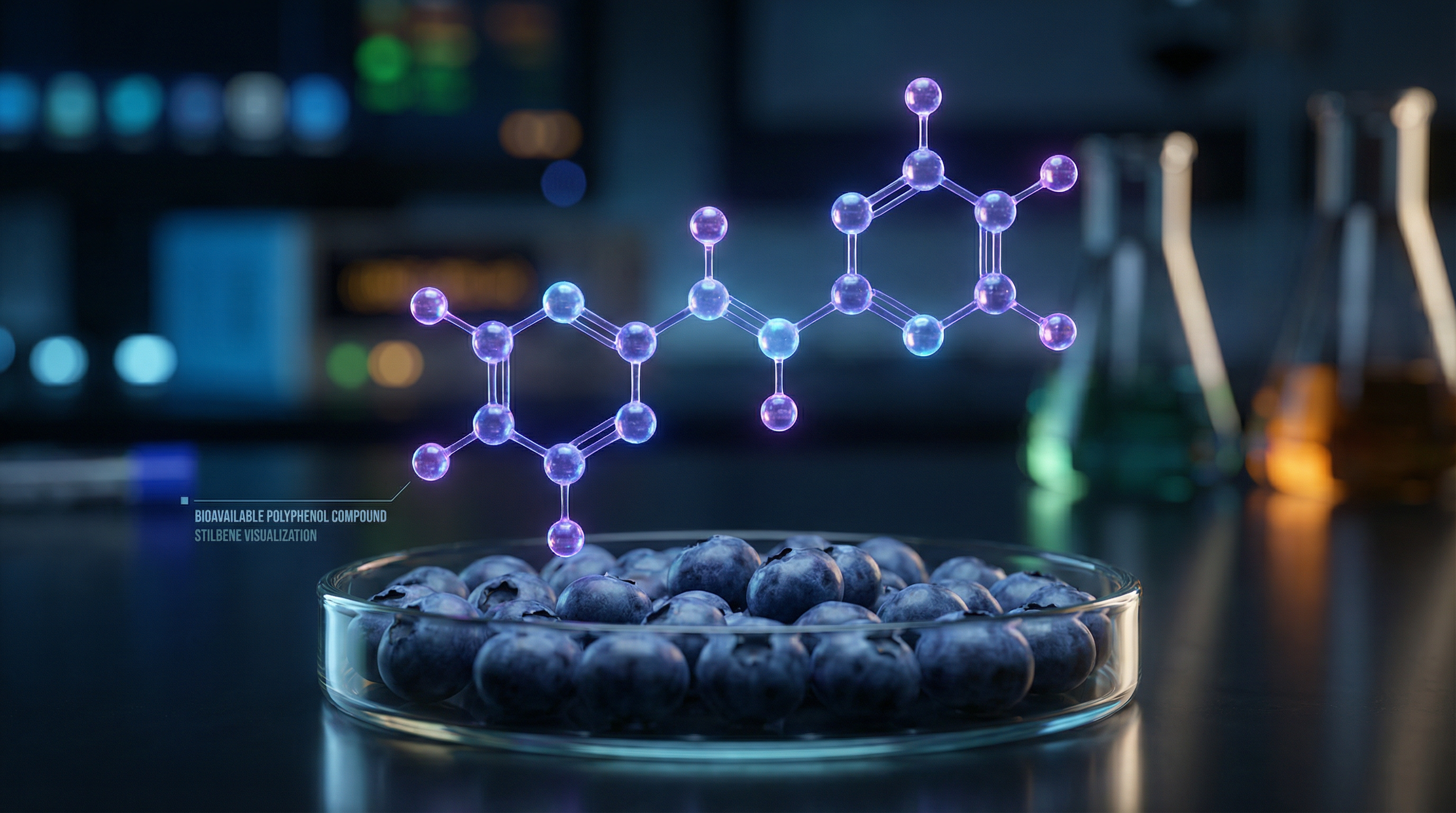
If you’ve been following the longevity supplement space, you’ve almost certainly heard of resveratrol. But there’s a closely related compound that many researchers now consider superior in several key ways: pterostilbene.
Found naturally in blueberries, grapes, and certain tree barks, pterostilbene shares resveratrol’s core stilbene structure but with one critical difference — it’s far more bioavailable. That means more of it actually reaches your cells where it matters.
Here’s what the science says about pterostilbene and why it deserves a place in your longevity strategy.
What Is Pterostilbene?
Pterostilbene (trans-3,5-dimethoxy-4’-hydroxystilbene) is a naturally occurring stilbenoid — a class of polyphenolic compounds produced by plants as a defense mechanism against pathogens and environmental stress. It’s structurally similar to resveratrol, but with two methoxy groups replacing two of resveratrol’s hydroxyl groups.
This seemingly small chemical difference has massive pharmacological consequences.
Natural Sources of Pterostilbene
- Blueberries — the richest dietary source (up to 99 ng/g in fresh berries)
- Grapes and red wine — present in smaller amounts alongside resveratrol
- Heartwood of Pterocarpus marsupium (Indian Kino tree) — used in Ayurvedic medicine for centuries
- Peanuts — trace amounts in the skin
- Cranberries and lingonberries — modest concentrations
While blueberries are the best-known dietary source, the concentrations are too low to achieve therapeutic doses through food alone. A single serving of blueberries provides roughly 20–40 micrograms of pterostilbene — far below the 50–250 mg doses used in clinical research.
Why Pterostilbene Outperforms Resveratrol in Bioavailability
This is the headline difference. Resveratrol has a well-documented bioavailability problem — oral absorption is high, but rapid metabolism in the gut and liver (first-pass glucuronidation and sulfation) means that less than 1% of ingested resveratrol reaches systemic circulation in its active form.
Pterostilbene, by contrast, has an oral bioavailability of approximately 80% — roughly four times that of resveratrol. The two methoxy groups make pterostilbene more lipophilic (fat-soluble), which:
- Increases cellular membrane permeability — it crosses into cells and tissues more efficiently
- Resists metabolic degradation — the methoxy groups protect against rapid glucuronidation
- Extends half-life — pterostilbene’s elimination half-life is roughly 105 minutes compared to resveratrol’s 14 minutes
In practical terms, a 50 mg dose of pterostilbene delivers significantly more active compound to your tissues than a 500 mg dose of resveratrol. This is why researchers increasingly favor pterostilbene in both preclinical and clinical studies.
How Pterostilbene Works: Mechanisms of Action
Sirtuin Activation and NAD+ Metabolism
Like resveratrol, pterostilbene activates SIRT1 — the longevity-associated sirtuin enzyme that depends on NAD+ as a cofactor. But pterostilbene may actually be more effective at this job.
A 2012 study published in Biochemical and Biophysical Research Communications found that pterostilbene activated SIRT1 at lower concentrations than resveratrol, likely because its superior bioavailability allows more compound to reach intracellular targets.
SIRT1 activation by pterostilbene promotes:
- Mitochondrial biogenesis via PGC-1α signaling
- DNA repair through deacetylation of repair proteins
- Reduced inflammation by suppressing NF-κB
- Enhanced autophagy — the cellular cleanup process that declines with age
Because sirtuins consume NAD+ as a substrate, pairing pterostilbene with an NAD+ precursor like NMN may amplify the benefits of both compounds. This is a strategy increasingly popular in longevity stacking protocols.
AMPK Activation
Pterostilbene robustly activates AMP-activated protein kinase (AMPK), the master metabolic sensor that shifts cellular activity from growth toward repair and energy efficiency. AMPK activation:
- Increases glucose uptake in skeletal muscle
- Promotes fatty acid oxidation
- Inhibits mTOR signaling, favoring autophagy and cellular maintenance
- Enhances mitochondrial function and reduces oxidative damage
In animal models, pterostilbene-driven AMPK activation has been linked to reduced visceral fat, improved insulin sensitivity, and enhanced exercise performance.
Antioxidant and Anti-Inflammatory Pathways
Pterostilbene is a potent activator of the Nrf2 pathway — the master regulator of antioxidant defense. Nrf2 activation upregulates the production of endogenous antioxidant enzymes including:
- Superoxide dismutase (SOD)
- Glutathione peroxidase
- Heme oxygenase-1 (HO-1)
- NAD(P)H quinone oxidoreductase 1 (NQO1)
This is fundamentally different from exogenous antioxidants like vitamin C. Rather than directly scavenging free radicals (a one-to-one reaction), pterostilbene amplifies your body’s own antioxidant machinery — a far more efficient strategy.
On the inflammation front, pterostilbene inhibits COX-2, iNOS, and multiple pro-inflammatory cytokines (TNF-α, IL-6, IL-1β) through suppression of the NF-κB and MAPK signaling cascades.
Key Health Benefits of Pterostilbene
Brain Health and Neuroprotection
This may be pterostilbene’s most impressive area of research. Its high lipophilicity allows it to cross the blood-brain barrier more effectively than resveratrol, making it a superior candidate for neuroprotective applications.
Research findings include:
- Cognitive enhancement in aging — A 2012 randomized controlled trial in older adults found that pterostilbene supplementation (100 mg twice daily) improved working memory performance
- Reduced neuroinflammation — Animal studies show pterostilbene decreases microglial activation and neuroinflammatory markers in aged brains
- Amyloid-beta reduction — Preclinical research demonstrates pterostilbene reduces amyloid plaque formation and tau phosphorylation, two hallmarks of Alzheimer’s disease
- Dopaminergic protection — Studies in Parkinson’s disease models show pterostilbene protects dopamine-producing neurons from oxidative damage
Cardiovascular Support
Pterostilbene demonstrates broad cardiovascular benefits:
- Cholesterol management — A 2014 clinical trial found that 100 mg/day of pterostilbene reduced LDL cholesterol by an average of 10% and increased HDL cholesterol
- Blood pressure regulation — The same trial showed modest reductions in systolic blood pressure
- Endothelial function — Pterostilbene enhances nitric oxide production, improving blood vessel flexibility
- Anti-atherosclerotic effects — Reduces oxidized LDL and foam cell formation in arterial walls
Metabolic Health and Blood Sugar Regulation
Pterostilbene shows particular promise for metabolic health:
- Improves insulin sensitivity via AMPK activation and GLUT4 translocation
- Reduces fasting blood glucose in animal models of type 2 diabetes
- Decreases hemoglobin A1c markers in preclinical studies
- Inhibits adipogenesis (fat cell formation) and promotes lipolysis
Anti-Aging and Cellular Senescence
Emerging research suggests pterostilbene may have mild senolytic or senostatic properties — meaning it can help clear or suppress senescent (“zombie”) cells that accumulate with age and drive chronic inflammation.
A 2020 study found that pterostilbene reduced markers of cellular senescence (p16, p21, and the senescence-associated secretory phenotype) in aged tissue models. While it’s not as potent a senolytic as compounds like fisetin, its daily-use safety profile makes it attractive as a maintenance compound between more aggressive senolytic protocols.
Pterostilbene vs. Resveratrol: Head-to-Head Comparison
| Factor | Pterostilbene | Resveratrol |
|---|---|---|
| Oral bioavailability | ~80% | less than 1% |
| Half-life | ~105 minutes | ~14 minutes |
| Lipophilicity | High (crosses BBB) | Moderate |
| SIRT1 activation | Effective at lower doses | Requires higher doses |
| Clinical research volume | Growing but smaller | Extensive |
| Typical supplement dose | 50–250 mg/day | 250–1,000 mg/day |
| Cost | Higher per gram | Lower per gram |
| Food sources | Blueberries, grapes | Red wine, grapes, knotweed |
The bottom line: pterostilbene delivers more active compound per milligram but has a smaller clinical research base. Many longevity practitioners now recommend pterostilbene over resveratrol, or combine both at lower doses for synergistic benefits.
Dosage Guidelines
Clinical research has used the following doses:
- General longevity support: 50–100 mg/day
- Cognitive support: 100–150 mg twice daily (based on the Chang et al. clinical trial)
- Cardiovascular and metabolic health: 100–250 mg/day
- Combined with resveratrol: 50 mg pterostilbene + 250 mg resveratrol daily
Timing considerations:
- Take with a fat-containing meal to enhance absorption (pterostilbene is lipophilic)
- Can be taken once or twice daily depending on dose
- No significant difference between morning and evening dosing has been established
Stacking With Other Longevity Compounds
Pterostilbene pairs well with several other compounds in a longevity stack:
- NMN or NR — Provides the NAD+ substrate that SIRT1 (activated by pterostilbene) requires
- Quercetin — Complementary senolytic and anti-inflammatory mechanisms
- CoQ10 or Ubiquinol — Supports the mitochondrial electron transport chain alongside pterostilbene’s mitochondrial biogenesis effects
- Omega-3 fatty acids — Synergistic anti-inflammatory benefits and may enhance pterostilbene absorption
Safety Profile and Side Effects
Pterostilbene has demonstrated a favorable safety profile in clinical trials:
- Well-tolerated at doses up to 250 mg/day in healthy adults
- No serious adverse events reported in published clinical trials lasting up to 6–8 weeks
- Minor side effects may include mild gastrointestinal discomfort at higher doses
- LDL cholesterol increase — One clinical trial noted a slight increase in LDL when pterostilbene was combined with grape extract at higher doses (200+ mg/day). This effect was not seen at 100 mg/day
Cautions and contraindications:
- May interact with blood pressure medications (additive hypotensive effects)
- Theoretical interactions with blood thinners due to mild antiplatelet activity
- Pregnant and breastfeeding women should avoid supplementation due to insufficient safety data
- Those on cholesterol-lowering medications should monitor lipid panels when starting pterostilbene
Frequently Asked Questions
Is pterostilbene better than resveratrol?
For most longevity applications, pterostilbene offers advantages due to its dramatically superior bioavailability (roughly 80% vs. less than 1%), longer half-life, and ability to cross the blood-brain barrier more effectively. However, resveratrol has a much larger body of clinical research. Many experts recommend either pterostilbene alone or a combination of both compounds at moderate doses.
Can I get enough pterostilbene from blueberries?
No. Blueberries contain only trace amounts of pterostilbene (roughly 20–40 micrograms per serving). Clinical studies use doses of 50–250 mg per day — you would need to eat hundreds of pounds of blueberries daily to reach therapeutic levels. Supplementation is necessary for meaningful doses.
Can I take pterostilbene with NMN?
Yes, and this is actually a popular combination in longevity protocols. Pterostilbene activates SIRT1, which requires NAD+ to function. NMN boosts NAD+ levels, so the two compounds work synergistically. Taking them together may amplify the benefits of both.
How long does it take to notice effects from pterostilbene?
Most clinical trials run 6–8 weeks before measuring outcomes. Measurable changes in cholesterol, blood pressure, and cognitive markers typically appear within 4–8 weeks of consistent supplementation. Subjective improvements in energy and mental clarity may be noticed sooner by some individuals, though this varies widely.
Is pterostilbene safe for long-term use?
Current evidence suggests pterostilbene is safe at doses up to 250 mg/day based on clinical trials lasting 6–8 weeks. Longer-term human safety data is limited, though animal studies using chronic dosing have not revealed significant toxicity concerns. As with any supplement, periodic breaks and monitoring with your healthcare provider are advisable for extended use.
The Bottom Line
Pterostilbene represents one of the most promising longevity compounds available today. Its superior bioavailability solves the primary limitation that has plagued resveratrol for years, while maintaining — and in some cases exceeding — the same beneficial effects on sirtuins, AMPK, mitochondrial function, and inflammatory pathways.
For those building a science-based longevity supplement stack, pterostilbene deserves serious consideration either as a replacement for resveratrol or as a complementary addition. Its neuroprotective properties are particularly compelling given the growing prevalence of age-related cognitive decline.
As always, consult with a healthcare professional before starting any new supplement, especially if you take medications for blood pressure, cholesterol, or blood clotting.
This article is for informational purposes only and does not constitute medical advice. Always consult your healthcare provider before beginning any supplement regimen.