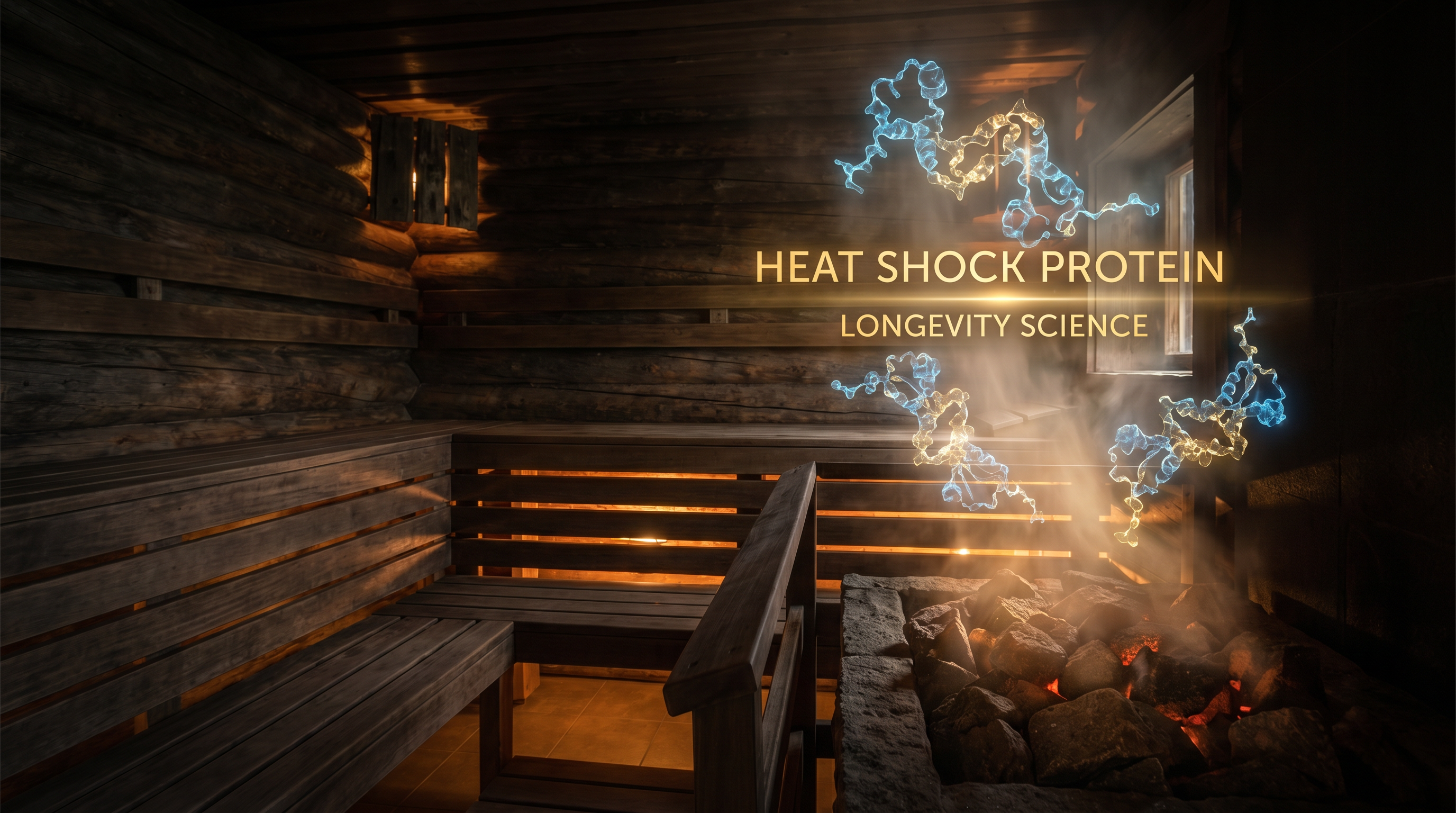
If you could spend 20 minutes, three times a week, and reduce your risk of dying from a cardiovascular event by nearly 50%—would you? That’s not a hypothetical. It’s what Finnish epidemiological data showed when researchers tracked over 2,300 middle-aged men for more than two decades. The intervention? Regular sauna use.
For most of human history, heat exposure was an unavoidable feature of life. Today, thermal stress is something most people actively avoid. Yet emerging research suggests that periodic, controlled heat stress is one of the most potent longevity signals you can deliver to your body—activating the same deep repair pathways triggered by exercise, fasting, and mitophagy-inducing protocols.
This article breaks down the molecular science of why sauna works, what the clinical data actually shows, and how to incorporate it intelligently into a longevity stack.
What Happens to Your Body in a Sauna?
Within minutes of entering a sauna (typically 80–100°C / 176–212°F), your core body temperature begins to rise. The body responds with a cascade of adaptive responses:
- Heart rate climbs to 100–150 BPM, mimicking moderate aerobic exercise
- Plasma volume increases, improving blood fluidity and cardiac output
- Heat shock proteins (HSPs) are rapidly synthesized inside cells
- Growth hormone surges by 200–300%, peaking in the post-sauna recovery window
- Norepinephrine rises 300%, improving focus and mood post-session
These aren’t random stress responses—they are evolutionarily conserved repair signals. Understanding them helps explain why populations with sauna traditions (Finland, Japan, Russia) consistently show favorable health and longevity metrics.
Heat Shock Proteins: Your Cellular Repair Crew
Heat shock proteins are molecular chaperones—proteins that help other proteins fold correctly, prevent aggregation, and clear damaged proteins from cells. They’re expressed under stress (heat, exercise, hypoxia) and are among the most ancient protective molecules in biology.
HSP70 and HSP90
The two most studied HSPs in the context of aging are HSP70 and HSP90. Both are dramatically upregulated by sauna-level heat:
- HSP70 prevents misfolded proteins from aggregating—a key driver of neurodegenerative diseases like Alzheimer’s and Parkinson’s
- HSP90 stabilizes proteins involved in DNA repair and immune signaling
- Both interact with FOXO3, a transcription factor associated with exceptional human longevity
Protein misfolding and aggregation is a hallmark of cellular aging. By regularly stimulating HSP production, sauna may slow the proteostatic decline that underlies much age-related disease.
HSPs and NAD+ Metabolism
Here’s where sauna intersects with NAD+ biology. Heat stress activates SIRT1, the NAD+-dependent sirtuin that governs cellular stress response. SIRT1 activation requires sufficient NAD+ levels—which is why combining sauna with NAD+ precursors like NMN or NR creates a synergistic effect. If you’re supplementing with compounds from the best mitochondrial supplement stack, sauna amplifies their downstream signaling.
Sauna and Mitochondrial Biogenesis
One of the most exciting findings in sauna research is its ability to trigger mitochondrial biogenesis—the creation of new mitochondria. This is the same pathway activated by zone 2 cardio and cold exposure.
The mechanism runs through PGC-1alpha, the master regulator of mitochondrial biogenesis. Heat stress elevates PGC-1alpha expression, which then drives:
- Increased mitochondrial density in muscle and heart tissue
- Upregulation of electron transport chain components
- Enhanced fat oxidation and metabolic flexibility
- Improved VO2 max (a strong predictor of all-cause longevity)
A 2021 study found that 8 weeks of repeated sauna sessions (3x/week, 30 minutes at 80°C) significantly increased markers of mitochondrial biogenesis in skeletal muscle, comparable to moderate endurance training.
AMPK Activation
Heat stress also activates AMPK (AMP-activated protein kinase), the cellular energy sensor triggered by caloric restriction and exercise. AMPK activation:
- Stimulates autophagy (cellular cleanup)
- Inhibits mTOR (pro-aging signaling pathway)
- Promotes glucose uptake and fatty acid oxidation
This makes sauna one of the few non-pharmacological interventions that simultaneously activates autophagy while suppressing mTOR—a combination that rapamycin researchers are actively studying.
Cardiovascular Benefits: The Finnish Evidence
The landmark KIHD (Kuopio Ischemic Heart Disease Risk Factor) study followed 2,315 Finnish men aged 42–60 for a median of 20.7 years. The findings were striking:
| Sauna Frequency | Cardiovascular Mortality Reduction | All-Cause Mortality Reduction |
|---|---|---|
| 1x per week | Baseline | Baseline |
| 2–3x per week | 22% reduction | 24% reduction |
| 4–7x per week | 48% reduction | 40% reduction |
These numbers held up after adjusting for confounding variables including physical activity, alcohol use, smoking, BMI, and socioeconomic status. The dose-response relationship is particularly compelling—more frequent sauna use correlated with greater benefit.
Mechanisms for Cardiovascular Protection
Several mechanisms explain the cardiovascular data:
Arterial compliance: Heat causes vasodilation, reducing arterial stiffness. Regular sauna use has been shown to lower systolic blood pressure by 5–8 mmHg in hypertensive individuals.
LDL particle reduction: Studies show sauna use reduces LDL-C and increases HDL-C, improving the lipid profile associated with cardiovascular risk.
CRP and inflammation: Regular sauna users show significantly lower C-reactive protein (CRP) levels—a key biomarker of chronic inflammation and cardiovascular risk.
Heart rate variability (HRV): Post-sauna recovery periods are associated with parasympathetic rebound, improving HRV—a powerful predictor of cardiac health and biological age.
Neuroprotective Effects
The brain is particularly sensitive to protein misfolding, making HSP induction especially relevant for cognitive longevity.
A population-based study of 2,315 Finnish men found that those who used sauna 4–7 times per week had a 65% lower risk of developing Alzheimer’s disease and a 66% lower risk of dementia compared to once-weekly users. The effect was independent of known risk factors.
Proposed mechanisms include:
- HSP70 clearance of amyloid-beta: Heat stress promotes the clearance of misfolded amyloid proteins before they aggregate
- BDNF upregulation: Heat stress elevates brain-derived neurotrophic factor, supporting neuroplasticity and hippocampal health
- Endorphin and dynorphin release: The opioid-like peptides released during sauna may have neuroprotective signaling roles
- Improved cerebral blood flow: Vasodilation during heat exposure increases oxygen delivery to the brain
Sauna and Hormonal Health
Beyond stress proteins and mitochondria, sauna has significant effects on anabolic hormone profiles:
Growth Hormone (GH): Two 20-minute sauna sessions at 80°C separated by a 30-minute cooling period can increase GH by 200–300%. This GH pulse supports lean mass maintenance, fat metabolism, and cellular repair—all critical for longevity.
Testosterone: Some evidence suggests sauna preserves testosterone levels in aging men, though this data is less robust than the GH findings.
Insulin sensitivity: Regular sauna use improves insulin sensitivity markers, including fasting glucose and HOMA-IR scores, in ways similar to moderate exercise.
Optimal Sauna Protocol for Longevity
Based on the available research, here are evidence-informed recommendations:
| Parameter | Recommendation |
|---|---|
| Temperature | 80–100°C (176–212°F) |
| Session duration | 15–25 minutes per session |
| Frequency | 3–7 sessions per week |
| Sessions per visit | 1–3 rounds with cooling breaks |
| Cooling method | Cool shower or air cooling (10–15 min) |
| Hydration | 500–750 mL water post-session |
| Timing | Evening sessions may improve sleep quality |
The 4–7x per week frequency associated with the greatest longevity benefit in the Finnish data can be approximated with shorter sessions (15–20 minutes) for those new to heat exposure.
Traditional Finnish vs. Infrared Sauna
Most longevity research has used traditional Finnish saunas (dry or steam at 80–100°C). Infrared saunas operate at lower temperatures (50–60°C) but penetrate tissue more deeply and appear to produce similar cardiovascular and HSP responses. Some practitioners prefer infrared for tolerability, particularly in warmer climates.
Sauna Stacking: Maximizing Longevity Synergies
Sauna pairs exceptionally well with other longevity interventions:
With NMN/NR supplementation: Sauna activates SIRT1 which requires NAD+. Ensuring adequate NAD+ via supplementation amplifies the sirtuin-mediated benefits of heat stress.
With taurine: Taurine’s cardioprotective effects complement sauna’s cardiovascular benefits. Taurine also has osmoregulatory effects that may support fluid balance during heat exposure.
With cold exposure: Alternating sauna and cold (contrast therapy) creates a powerful cardiovascular training effect through repeated vasodilation/vasoconstriction cycles. Some research suggests this may amplify norepinephrine release beyond either modality alone.
With magnesium: Sweating depletes magnesium. Supplementing with magnesium glycinate post-sauna replaces electrolytes while supporting sleep quality in the recovery window.
Safety Profile and Precautions
Sauna is exceptionally safe for healthy adults, but certain conditions require caution:
Contraindications: Unstable angina, recent myocardial infarction (within 6 months), severe aortic stenosis, uncontrolled hypertension
Precautions:
- Avoid alcohol before or during sauna (increases orthostatic hypotension risk)
- Those with low blood pressure should exit gradually and sit before standing
- Pregnant women should limit sauna use and consult their physician
- Some medications (antihypertensives, diuretics) may require dose adjustment
Dehydration: Sauna users lose 0.5–1.5 L of fluid per session. Replacing fluids with electrolytes (not plain water alone) is important for regular users.
The Finnish population-level data, accumulated over centuries of daily sauna use, provides strong reassurance about the long-term safety profile for healthy adults.
FAQ
Q: Does sauna actually extend lifespan or just correlate with healthier lifestyles? The KIHD study adjusted for physical activity, alcohol use, BMI, and smoking status, and the association remained strong. The biological mechanisms (HSP induction, mitochondrial biogenesis, cardiovascular adaptation) provide plausible causal pathways beyond lifestyle confounding.
Q: How soon does sauna produce measurable benefits? Acute benefits (GH spike, improved HRV) occur after a single session. Structural adaptations (mitochondrial biogenesis, arterial compliance improvements) typically emerge after 4–8 weeks of regular use.
Q: Is infrared sauna as effective as traditional Finnish sauna for longevity? Most landmark research used traditional saunas. Infrared saunas produce comparable HSP induction and cardiovascular responses at lower temperatures, making them more accessible. The longevity outcomes data for infrared is less extensive but mechanistically plausible.
Q: Can sauna replace exercise? No—sauna mimics some cardiovascular effects of moderate exercise but doesn’t build skeletal muscle strength or produce the same metabolic adaptations as resistance training. It’s best viewed as an additive longevity tool, not a substitute.
Q: How much does sauna cost vs. gym membership? Home infrared saunas range from $1,000–$5,000. Many gyms, spas, and community centers offer sauna access. Given the cardiovascular and longevity data, the cost-per-benefit ratio compares favorably to most health interventions.
The Bottom Line
Few interventions in longevity science can match sauna’s combination of accessibility, safety, and evidence depth. Activating heat shock proteins, stimulating mitochondrial biogenesis, improving cardiovascular markers, and potentially reducing dementia risk—all from passive heat exposure—makes sauna one of the highest-leverage tools in the longevity toolkit.
For anyone building a serious longevity protocol, sauna belongs alongside the foundations: a solid supplement stack, regular exercise, quality sleep, and targeted supplementation. The Finnish weren’t onto something by accident—they were practicing hormetic medicine long before the word existed.