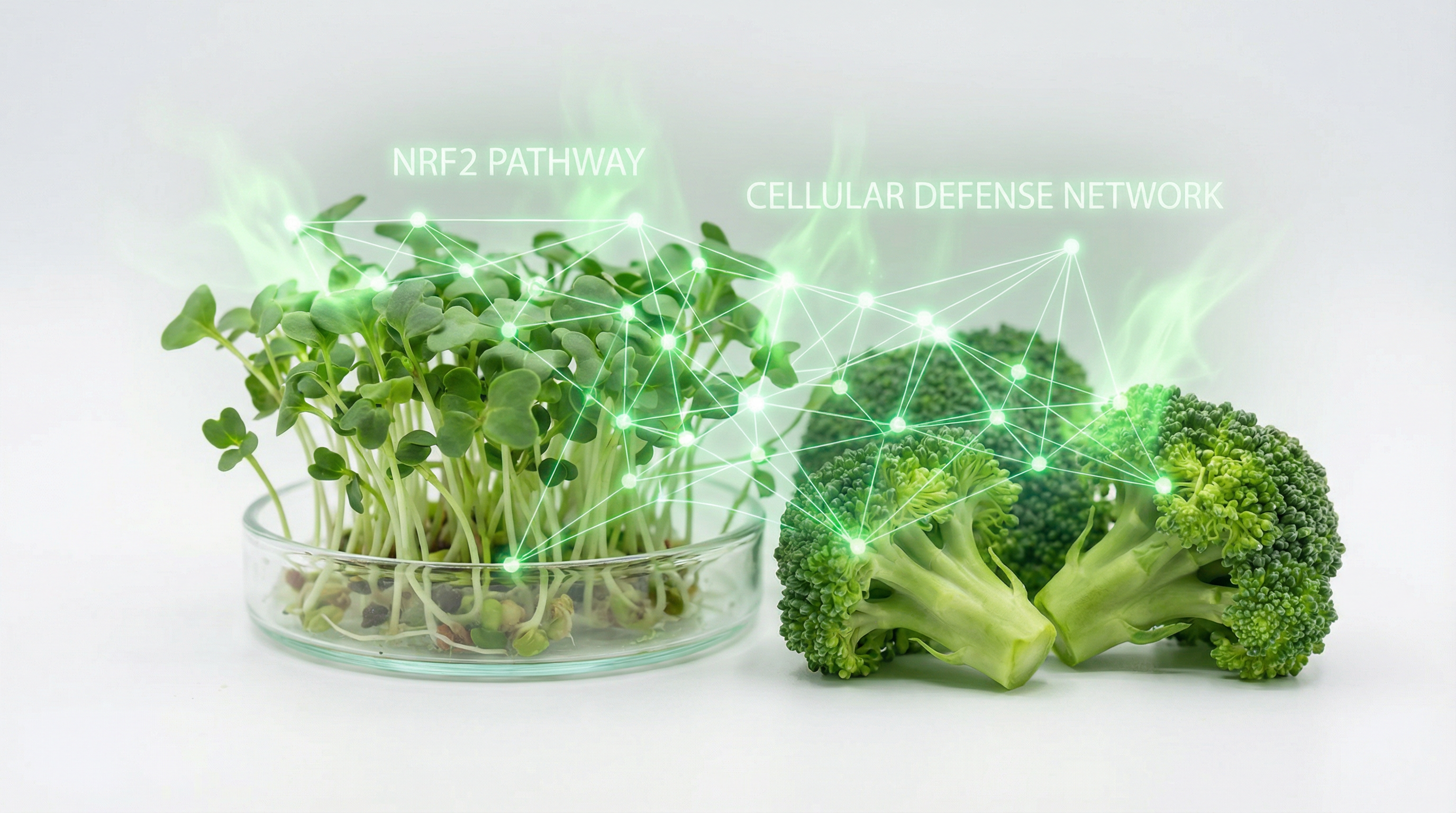
If there’s one compound that bridges the gap between whole-food nutrition and pharmaceutical-grade longevity science, it’s sulforaphane. Found in cruciferous vegetables — and in extraordinary concentrations in broccoli sprouts — sulforaphane has quietly accumulated one of the most impressive bodies of research in preventive medicine. It activates the NRF2 pathway, your body’s master antioxidant switch, triggering a cellular defense cascade that reduces inflammation, protects DNA, clears damaged proteins, and appears to meaningfully reduce cancer risk. For longevity researchers, sulforaphane represents something rare: a natural compound with mechanisms robust enough to warrant serious scientific attention.
What Is Sulforaphane?
Sulforaphane is an isothiocyanate — a sulfur-containing compound produced when the enzyme myrosinase reacts with glucoraphanin, a glucosinolate stored in cruciferous vegetables. This reaction occurs when plant cells are damaged by chewing, chopping, or crushing. The result is sulforaphane, which is technically a “prodrug” synthesized on demand rather than stored preformed.
Broccoli sprouts are the richest known source, containing 20–50 times more glucoraphanin per gram than mature broccoli. A small handful of sprouts (around 30g) can deliver the same glucoraphanin as nearly 500g of adult broccoli.
Supplements typically contain either:
- Glucoraphanin (the precursor) — requires your gut bacteria’s myrosinase to convert
- Sulforaphane (active form) — directly bioavailable but less stable
How Sulforaphane Works: The NRF2 Pathway
The central mechanism of sulforaphane is activation of NRF2 (Nuclear factor erythroid 2-related factor 2), often called the “master regulator of antioxidant response.”
Under normal conditions, NRF2 is kept inactive in the cytoplasm, bound to its inhibitor KEAP1. Sulforaphane modifies specific cysteine residues on KEAP1, causing it to release NRF2. Once freed, NRF2 travels to the nucleus and activates over 200 cytoprotective genes, including:
- Heme oxygenase-1 (HO-1) — anti-inflammatory
- NAD(P)H quinone oxidoreductase 1 (NQO1) — detoxification
- Glutathione S-transferases — neutralize carcinogens
- Thioredoxin reductase — recycles antioxidants
This is what makes sulforaphane uniquely powerful compared to direct antioxidants like Vitamin C or E. Rather than neutralizing one free radical at a time, sulforaphane amplifies your body’s own antioxidant machinery — producing a sustained, broad-spectrum defensive response lasting 48–72 hours from a single dose.
Key Health Benefits
1. Cancer Prevention and Chemoprevention
The anti-cancer evidence for sulforaphane is among the most compelling in nutritional science.
Multiple mechanisms are at play:
- Phase II enzyme induction — neutralizes carcinogens before DNA damage occurs
- Apoptosis induction — triggers programmed death in cancerous cells
- Histone deacetylase (HDAC) inhibition — reactivates silenced tumor-suppressor genes
- Angiogenesis inhibition — reduces blood vessel formation feeding tumors
Breast cancer: A pilot clinical trial found that sulforaphane from broccoli sprout extracts altered gene expression in breast tissue, including upregulation of tumor-suppressor pathways. Women with BRCA1/2 mutations showed particular interest in this research.
Prostate cancer: A randomized controlled trial in men with biochemical recurrence of prostate cancer showed that sulforaphane significantly slowed PSA doubling time — a marker of cancer progression — compared to placebo.
Colorectal cancer: Sulforaphane demonstrated dose-dependent inhibition of colorectal cancer cell proliferation and enhanced apoptosis in human clinical samples.
2. Powerful Anti-Inflammatory Effects
Chronic low-grade inflammation — “inflammaging” — is the common denominator underlying most age-related diseases. Sulforaphane addresses it through multiple pathways:
NF-κB inhibition: Beyond NRF2 activation, sulforaphane suppresses NF-κB, the key transcription factor driving inflammatory cytokine production (TNF-α, IL-1β, IL-6).
A study in overweight individuals found that daily sulforaphane supplementation for 10 weeks significantly reduced CRP (C-reactive protein) levels by approximately 20% compared to placebo — a clinically meaningful reduction in cardiovascular inflammation.
Gut inflammation: Sulforaphane showed efficacy in reducing markers of intestinal inflammation, making it relevant for conditions like IBD and leaky gut.
3. Neuroprotection and Cognitive Function
The brain is highly vulnerable to oxidative stress, and NRF2 activation in neural tissue has significant implications for neurodegeneration.
Alzheimer’s disease: Animal models show sulforaphane reduces amyloid-beta plaque accumulation and tau hyperphosphorylation — the two hallmarks of Alzheimer’s pathology. Human studies remain in early stages, but the mechanistic case is compelling.
Autism spectrum disorder: A landmark randomized controlled trial published in PNAS found that sulforaphane treatment in young men with ASD significantly improved social interaction, verbal communication, and aberrant behaviors compared to placebo, with benefits persisting for the 18-week study duration.
Traumatic brain injury: NRF2 activation via sulforaphane has shown neuroprotective effects in TBI models, reducing neuroinflammation and oxidative damage.
4. Cardiovascular Protection
Heart disease remains the number one killer, and sulforaphane offers multiple cardioprotective mechanisms:
- Reduces oxidative LDL — prevents LDL from being oxidized into the form that triggers atherosclerotic plaque
- Improves endothelial function — enhances nitric oxide availability in blood vessels
- Lowers blood pressure — a meta-analysis found significant reductions in systolic and diastolic blood pressure with sulforaphane-rich broccoli sprout extracts
5. Blood Sugar and Metabolic Health
A clinical trial in obese patients with type 2 diabetes found that concentrated broccoli sprout extract significantly reduced fasting blood glucose (by approximately 6.5%) and HbA1c over 12 weeks. The mechanism involves improved insulin sensitivity and reduced hepatic glucose production via FOXO1 regulation.
6. Detoxification and Environmental Protection
Sulforaphane is one of the most studied compounds for enhancing the body’s detoxification capacity. Studies in populations exposed to air pollution (including a landmark trial in rural China) found that sulforaphane from broccoli sprout beverages significantly increased urinary excretion of benzene (61%), acrolein (23%), and crotonaldehyde — carcinogens from air pollution — by inducing Phase II detoxification enzymes.
Dosage Guide
| Goal | Daily Dose (Sulforaphane Equivalent) | Source |
|---|---|---|
| General health / prevention | 10–20 mg | 30g broccoli sprouts or supplement |
| Anti-cancer / NRF2 activation | 20–40 mg | 60–80g sprouts or standardized extract |
| Clinical studies (ASD, diabetes) | 40–60 mg | Standardized supplement |
| Maximum studied | 100 mg | Research protocols |
Important notes:
- Broccoli sprouts are the most bioavailable source — aim for raw, freshly sprouted
- If using supplements with glucoraphanin (precursor), look for added myrosinase enzyme
- Avoid cooking sprouts — heat destroys myrosinase, significantly reducing conversion
- Growing your own sprouts at home is easy and cost-effective (~$10 of seeds yields months of supply)
Stacking Sulforaphane With Other Supplements
Sulforaphane works synergistically with several compounds in a longevity stack:
- Quercetin or Fisetin — both senolytic; combining NRF2 activation with senescent cell clearance addresses aging from multiple angles
- Mitochondrial supplements — NRF2 also supports mitochondrial biogenesis via PGC-1α signaling
- Berberine — AMPK activation complements NRF2’s cytoprotective effects
- NMN or NR — NAD+ precursors enhance DNA repair that sulforaphane helps protect in the first place
Safety Profile and Precautions
Sulforaphane has an excellent safety record across numerous clinical trials.
Generally safe for:
- Adults at doses up to 100 mg/day in research settings
- Long-term use (studies up to 12 months show no adverse signals)
Precautions:
- Thyroid conditions: Cruciferous vegetables contain goitrogens that may affect thyroid function at very high doses; standard supplement doses are generally fine, but those with hypothyroidism should discuss with their physician
- Anticoagulant medications: Sulforaphane may modestly affect drug metabolism via CYP enzymes; consult your doctor if taking warfarin or similar
- Pregnancy/breastfeeding: Insufficient safety data — avoid high-dose supplementation
- Drug metabolism: NRF2 activation can upregulate drug-metabolizing enzymes, potentially altering efficacy of certain medications
FAQ
Q: Is it better to eat broccoli sprouts or take a supplement? A: Sprouts offer superior bioavailability because you get active myrosinase enzyme along with glucoraphanin. Supplements are convenient and standardized, but look for products with added myrosinase. If growing sprouts isn’t practical, a high-quality standardized extract is a good alternative.
Q: How should I prepare broccoli sprouts to maximize sulforaphane? A: Eat them raw or lightly crushed — chewing activates myrosinase. If you must cook them, pre-chop and let sit for 40–60 minutes before cooking; this allows myrosinase to convert glucoraphanin first. Adding mustard seed powder (which contains active myrosinase) to cooked cruciferous vegetables also boosts sulforaphane yield.
Q: Can sulforaphane help with existing cancer? A: The evidence is strongest for cancer prevention (chemoprevention) rather than treatment. Some studies show benefit as an adjunct in specific cancers (prostate, breast), but sulforaphane should not replace conventional cancer treatment. Discuss with your oncologist before adding it to a cancer treatment protocol.
Q: Does sulforaphane deplete over time in sprout containers? A: Glucoraphanin in sprouts is relatively stable, but myrosinase enzyme activity decreases after harvest. Use sprouts within 5–7 days of harvest and store refrigerated. Pre-washed packaged sprouts may have reduced myrosinase activity due to heat treatment — check sourcing.
Q: How quickly does sulforaphane start working? A: NRF2 activation is detectable within 2–4 hours of ingestion. Anti-inflammatory and antioxidant markers improve within days to weeks of consistent supplementation. Benefits like cancer chemoprevention occur over months to years of consistent use — this is a long-game compound.
Sulforaphane occupies a unique position in the longevity supplement landscape: a naturally occurring compound with deep mechanistic science, multiple clinical trials, and a remarkable safety profile. Whether through a daily handful of home-grown broccoli sprouts or a standardized supplement, regular sulforaphane intake offers one of the most evidence-backed interventions in preventive medicine.
For a comprehensive approach to longevity supplementation, explore our beginner’s supplement stack guide and discover how to activate the body’s cellular clean-up process through mitophagy.