Alpha lipoic acid (ALA) occupies a unique position among antioxidants: it’s both fat-soluble and water-soluble, meaning it protects mitochondria in environments where most antioxidants can’t reach.
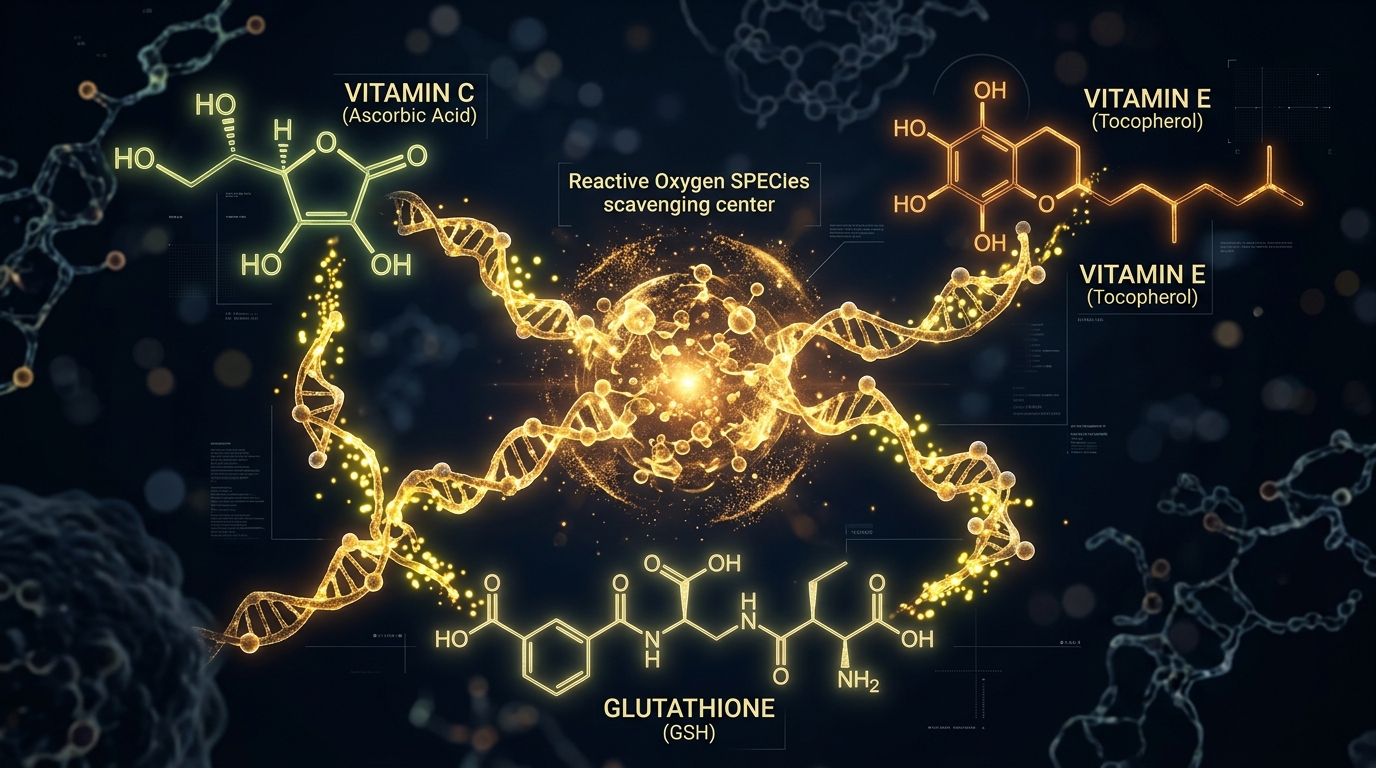
More importantly, ALA is the only antioxidant that directly recycles other antioxidants — regenerating vitamin C, vitamin E, and glutathione after they’ve been oxidized.
This “master antioxidant” property makes it particularly valuable for mitochondrial health.
What Is Alpha Lipoic Acid?
Alpha lipoic acid (also called thioctic acid) is a sulfur-containing fatty acid produced naturally in every cell of the body, concentrated in mitochondria.
It serves as a cofactor for several critical mitochondrial enzymes involved in energy production:
- Pyruvate dehydrogenase complex
- Alpha-ketoglutarate dehydrogenase complex
Without adequate ALA, these enzymatic reactions — and ATP production — are impaired.
ALA exists in two forms:
- R-ALA (R-alpha lipoic acid): The natural, biologically active form produced by the body
- S-ALA: Synthetic mirror image; lower biological activity
Most supplements contain a racemic mixture (50% R, 50% S). R-ALA supplements contain only the active form.
How ALA Supports Mitochondrial Function
Direct Mitochondrial Roles
- Enzymatic cofactor — essential for pyruvate and alpha-ketoglutarate dehydrogenase complexes in the Krebs cycle
- Mitochondrial antioxidant — neutralizes free radicals directly in mitochondria
- Metal chelation — binds and helps remove heavy metals that impair mitochondrial function
The Antioxidant Recycling Network
ALA’s most remarkable property is regenerating depleted antioxidants:
ALA → regenerates → Glutathione
Glutathione → regenerates → Vitamin C
Vitamin C → regenerates → Vitamin E
This antioxidant cascade means ALA effectively amplifies the protective capacity of your entire antioxidant network.
Activates Nrf2
ALA activates Nrf2, the “master antioxidant switch” that upregulates production of hundreds of protective proteins including glutathione synthetase, superoxide dismutase, and catalase.
AMPK Activation
ALA activates AMPK, the cellular energy sensor that:
- Promotes mitochondrial biogenesis
- Enhances insulin sensitivity
- Reduces mTOR activity (promotes autophagy)
Clinical Evidence
Diabetic Neuropathy (Strongest Evidence)
This is ALA’s best-documented clinical application. Multiple randomized controlled trials (including the ALADIN, SYDNEY, and NATHAN trials) show:
- 600mg IV ALA/day significantly reduces neuropathy symptoms
- Oral ALA (600–1,800mg/day) improves neuropathic pain
- Approved as a prescription treatment for diabetic neuropathy in Germany since 1966
Insulin Sensitivity
ALA improves insulin-stimulated glucose uptake in muscle cells. A meta-analysis of 24 RCTs found significant improvements in fasting blood glucose and HbA1c with ALA supplementation.
Cognitive Function
- Reduces oxidative stress markers in brain tissue
- Small studies show cognitive benefits in early Alzheimer’s
- Reduces homocysteine levels (a cardiovascular and cognitive risk factor)
Exercise Performance
ALA’s antioxidant effects may reduce exercise-induced oxidative stress and inflammation, potentially improving recovery — though evidence is limited.
Cardiovascular
Reduces oxidative LDL cholesterol, improves endothelial function, may reduce blood pressure modestly.
ALA vs. R-ALA: Does It Matter?
R-ALA (R-alpha lipoic acid) is:
- The biologically active form produced by the body
- Better absorbed than racemic ALA (some studies suggest 2–5x greater bioavailability)
- More stable in newer stabilized forms
- More expensive
Racemic ALA (standard ALA):
- 50% R-ALA + 50% S-ALA
- S-ALA may partially inhibit R-ALA’s effects
- Well-studied in clinical trials (most diabetic neuropathy trials used racemic ALA)
- Less expensive, widely available
Recommendation:
- For general use: Racemic ALA at standard doses is fine
- For maximum effect: R-ALA at lower doses (50–100mg R-ALA ≈ 200–300mg racemic ALA)
- Stabilized R-ALA (Na-RALA or Biotin-bound R-ALA) is more stable and preferred
Dosage Guide
| Use Case | Dose | Form |
|---|---|---|
| General antioxidant/mitochondrial | 300–600mg/day | Racemic ALA |
| Diabetic neuropathy | 600–1,200mg/day | Racemic ALA |
| Insulin sensitivity | 600mg/day | Racemic ALA |
| Maximum bioavailability | 100–200mg/day | Stabilized R-ALA |
| Cognitive support | 600mg/day | Racemic ALA |
Tip: Lower doses of R-ALA may be equivalent to higher doses of racemic ALA.
How to Take ALA for Best Results
Timing Matters
ALA should be taken on an empty stomach or 30–60 minutes before meals. Food significantly reduces absorption (especially carbohydrates).
Splitting Doses
The half-life of ALA is relatively short (~3 hours). Splitting into 2 doses (morning and afternoon, fasted) maintains steadier blood levels.
Stack With Biotin
High-dose ALA can deplete biotin (they share the same transporter). If taking >600mg/day, supplement with 2–4mg biotin.
With Other Antioxidants
ALA stacks well with:
- Vitamin C (ALA recycles it)
- CoQ10 (synergistic mitochondrial protection)
- Glutathione or NAC (ALA regenerates glutathione)
- Vitamin E (ALA recycles it)
Potential Side Effects
Generally well-tolerated. Possible side effects include:
- Nausea/GI upset (most common, take with small amount of food if severe)
- Headache
- Skin rash (rare)
- Hypoglycemia risk — ALA improves insulin sensitivity; diabetics on medication must monitor blood glucose
Drug interactions:
- Blood sugar medications — may enhance effects (monitor glucose)
- Thyroid medications — may reduce absorption (separate doses by 4 hours)
- Cisplatin (chemotherapy) — may reduce efficacy
Contraindications:
- Thiamine (B1) deficiency — ALA can worsen Wernicke’s encephalopathy
- Avoid in alcoholism without B vitamin supplementation
Quality Considerations
ALA is notoriously unstable and degrades quickly when exposed to heat, moisture, and light. Signs of poor quality:
- Yellow/brown coloration (degraded)
- Clumping
- Strong sulfur odor beyond normal
Best practices:
- Choose stabilized forms (Na-RALA, Biotin-bound)
- Store in cool, dark location
- Purchase from reputable brands with third-party testing
- Avoid loose powder — capsules better preserve stability
The Bottom Line
Alpha lipoic acid earns its place in a mitochondrial supplement stack through multiple complementary mechanisms: direct mitochondrial cofactor activity, powerful antioxidant recycling, AMPK activation, and insulin sensitization.
The strongest human evidence is for diabetic neuropathy and insulin sensitivity, but the mitochondrial antioxidant and energy metabolism benefits are mechanistically compelling.
For most people, 300–600mg racemic ALA daily (fasted) is a reasonable starting point. Those wanting maximum bioavailability should consider stabilized R-ALA at 100–200mg.
Related: Best Mitochondrial Supplement Stack | Mitochondrial Dysfunction: Symptoms & Solutions