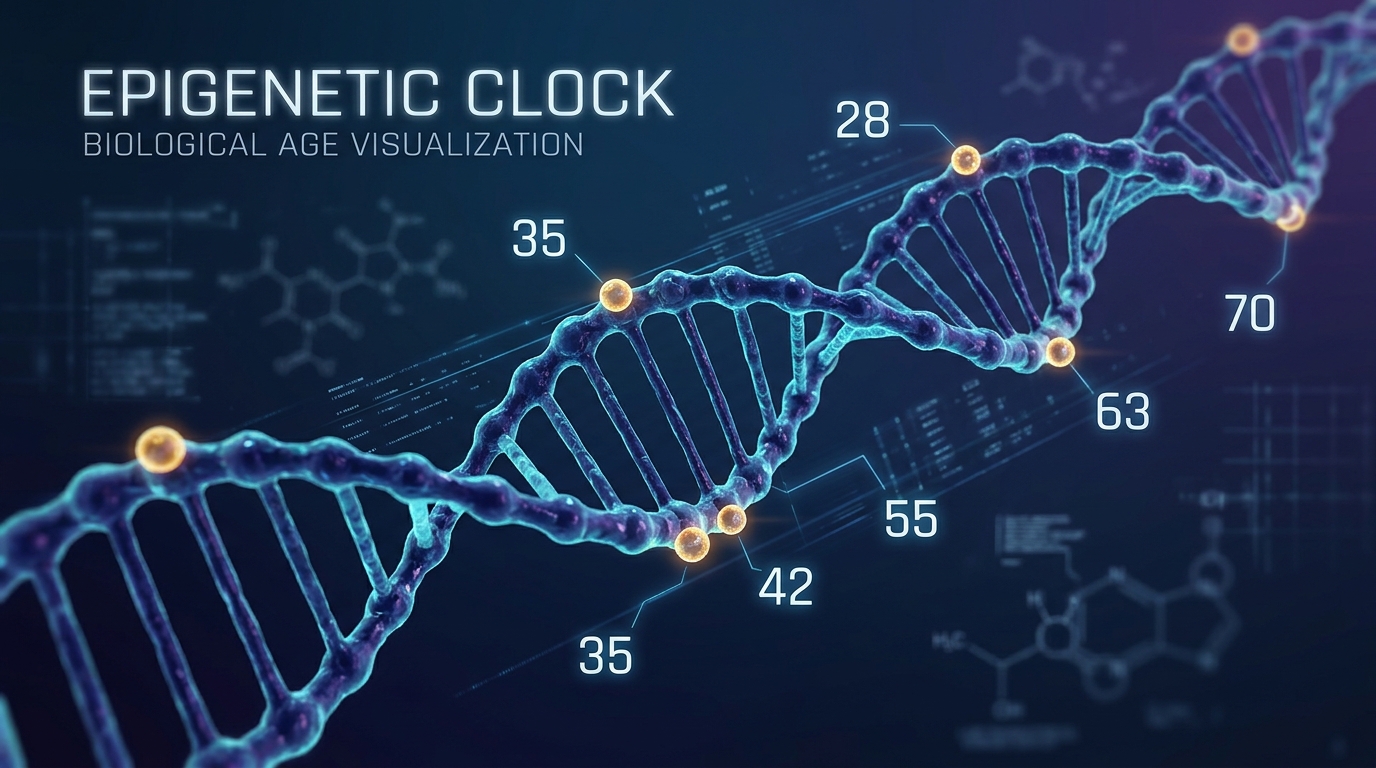
Two people can both be 50 years old, yet one may have the biology of a 40-year-old while the other shows markers of a 65-year-old.
Biological age — how old your body actually is at the cellular level — is a far better predictor of health outcomes, disease risk, and longevity than the year on your birth certificate.
Testing biological age is no longer just for researchers. Several consumer tests now give you actionable data on your aging trajectory — and whether your lifestyle and supplements are actually working.
Chronological Age vs. Biological Age
Chronological age: How many years you’ve been alive.
Biological age: The functional age of your cells, tissues, and organs, based on molecular markers of aging.
Biological age can diverge significantly from chronological age based on:
- Genetics (~20–25% of longevity variance)
- Lifestyle factors (~75–80%)
- Accumulated disease burden
- Environmental exposures
The goal of longevity medicine is to make biological age lower than chronological age — and to slow the rate at which biological age increases.
The Main Categories of Biological Age Tests
1. Epigenetic (DNA Methylation) Clocks
What they measure: Patterns of DNA methylation — chemical modifications to DNA that change predictably with aging.
Why they matter: Epigenetic clocks are the most validated biological age measures, capable of predicting mortality risk, disease incidence, and remaining lifespan better than any other biomarker.
The science: Steve Horvath’s original 2013 epigenetic clock correlated highly with biological age across cell types. Second and third-generation clocks (PhenoAge, GrimAge, DunedinPACE) are even more predictive.
Consumer options:
| Test | Price | Clock Used | What You Get |
|---|---|---|---|
| TruAge Complete | ~$299 | Multiple clocks | Biological age + aging rate |
| Elysium Index | ~$299/year | Horvath + others | Biological age score |
| Life Length | ~$200 | Telomere length | Telomere-based age |
| myDNAge | ~$299 | Horvath clock | Biological age |
Best for: Tracking whether interventions are actually changing your aging trajectory over time.
2. Blood Biomarker Panels
Blood tests provide snapshots of biological systems that correlate with aging. Less mechanistically fundamental than epigenetic clocks but cheaper and more actionable.
Key longevity biomarkers:
Inflammation:
- hsCRP (high-sensitivity C-reactive protein) — less than 1.0 mg/L optimal
- IL-6 — low levels associated with longevity
- Homocysteine — less than 10 μmol/L optimal
Metabolic:
- Fasting insulin — less than 5 μIU/mL optimal
- HbA1c — less than 5.3% optimal
- Fasting glucose — less than 90 mg/dL optimal
- Triglycerides — less than 80 mg/dL optimal
- HDL cholesterol — >60 mg/dL optimal
Hormonal:
- DHEA-S — decline correlates with aging
- IGF-1 — complex relationship with aging
- Testosterone (men) — decline with age
Oxidative stress:
- 8-OHdG (urine) — DNA oxidative damage marker
- Glutathione — cellular antioxidant capacity
Consumer blood panels:
- Inside Tracker (~$200–600) — comprehensive with personalized recommendations
- Function Health (~$500/year) — 100+ biomarkers with physician oversight
- Quest Diagnostics / LabCorp — can order individual tests through physician
3. Functional/Physical Tests
Physical performance tests are simple, free, and surprisingly good biological age predictors:
VO2 Max
- The single best predictor of longevity in numerous studies
- Each 1 MET increase in cardiorespiratory fitness = ~13% reduction in mortality
- Test: Maximal exercise test (lab) or estimated via smartwatch (Apple Watch, Garmin, Fitbit)
- Norms: Compare to age-sex matched population
Grip Strength
- Strong predictor of mortality risk, cardiovascular disease, and cognitive decline
- Simple to test with a dynamometer (~$20)
- Low grip strength = increased mortality risk at any age
Balance Tests
- One-leg balance test: Can you stand on one leg for 10 seconds with eyes closed?
- A 2022 study found inability to complete this test at 51–75 years associated with 84% higher mortality risk
Gait Speed
- Normal walking speed of >1.0 m/s is associated with better survival
- Slow gait speed is a strong predictor of adverse outcomes in older adults
Sit-to-Stand Test
- How many times can you stand from a chair in 30 seconds?
- Reflects lower body strength and power — both strong aging markers
4. Telomere Length Testing
Telomeres are the protective caps on chromosomes that shorten with each cell division. Short telomeres correlate with cellular aging.
Test options:
- Life Length (~$200) — most established telomere testing company
- TeloYears (~$89) — consumer-friendly option
Limitation: Telomere length has high variability and isn’t as predictive as epigenetic clocks. Don’t rely on it as your only biological age measure.
5. Advanced Functional Tests
DEXA Scan
- Measures bone density, visceral fat, and muscle mass
- Visceral fat is a powerful aging accelerant
- Available at many radiology centers (~$100–200)
Coronary Artery Calcium (CAC) Score
- CT scan measuring arterial calcification
- Highly predictive of cardiovascular events
- Age 40+ with risk factors should consider this (~$100–200)
Continuous Glucose Monitoring (CGM)
- 2-week wear reveals metabolic flexibility and glycemic variability
- Metabolic health is strongly linked to biological aging
- CGM devices: Levels, Nutrisense (~$200/month)
How to Use Biological Age Testing Effectively
Establish a Baseline
Test before making major lifestyle or supplement changes. This gives you a true before-and-after comparison.
Retest at Regular Intervals
Epigenetic clocks: Every 6–12 months Blood panels: Every 3–6 months Physical tests: Monthly (they’re free)
Don’t Optimize a Single Number
Biological age is a composite. Obsessing over one metric (e.g., epigenetic age) while ignoring others misses the picture.
Use Tests to Guide Decisions, Not Create Anxiety
The purpose of testing is to identify areas for improvement and verify that interventions are working. If results are unfavorable, treat them as information, not verdicts.
What Interventions Actually Change Biological Age?
The most compelling evidence for reducing epigenetic biological age:
| Intervention | Evidence | Effect Size |
|---|---|---|
| Exercise | Strong | Significant |
| Mediterranean diet | Moderate | Moderate |
| Caloric restriction | Strong (animal) | Significant |
| NMN/NAD+ precursors | Preliminary human | Modest |
| Rapamycin | Strong (animal) | Significant |
| Metformin | TAME trial ongoing | Unknown |
| Senolytics | Early human | Promising |
The Bottom Line
Biological age testing has moved from research labs to consumer products. While no test is perfect, combining:
- An epigenetic clock (TruAge or similar)
- A comprehensive blood panel
- Regular physical performance tests
…gives you a multi-dimensional view of your aging trajectory that chronological age simply cannot.
More importantly, these tests let you verify whether your longevity interventions are actually working — something that’s impossible to assess without objective data.
Related: Longevity Supplement Stack for Beginners | How to Increase NAD+ Levels Naturally